

Homelessness is solvable.
This is a key principle of Built for Zero, an effort supporting cities to end homelessness for entire populations. The Grand Rapids Area Coalition to End Homelessness joined the effort with the support of the Grand Rapids business community several years ago, and the coalition has established a focus on making homelessness rare, brief, and one time only.
The Chamber, with the help of the Greater Grand Rapids Chamber Foundation, has worked to support this vision and find ways to gain traction where no organization has direct authority or accountability, and promote a bias for action.
The Chamber Foundation has averaged less than $500/person to help remove obstacles to permanent housing. You can help by staying engaged or supporting the Chamber Foundation.
Metros across the country have experienced record increases in homelessness, and responding to it is complex and challenging (both in practical and political terms). There are more examples of what not to do (ignore the problems) than success stories. The benefit of tackling this issue head-on is that it’s a win-win-win. Measurable improvements mean:
- A higher quality of life for the individual. Chronic homelessness is often accompanied by physical and mental health challenges, and individuals are likely to live 17 years less than their peers.
- Reduced strain on system resources. Communities spend millions due to emergency services, public safety interactions, and hospital care related to homelessness. An individual that is stably housed and has access to support will engage in preventative and other care that is better suited to meet their needs.
- Increased vibrancy of business districts. Addressing homelessness supports clean and healthy public spaces and impacts the overall economic health of a region.
Engagement Matters
Business leaders in Grand Rapids have always been at the forefront of driving public-private partnerships for community good.
Dan Meyering of Trillium Ventures played a pivotal role in supporting the system’s participation in Built for Zero in May 2021, and the DeVos Family Foundations, Frey Foundation, & Jandernoa Foundation have made numerous strategic investments that have helped accelerate the work. The City and County have aligned their impact, and Trinity Health, Catherine’s Health, and Corewell Health have supported in numerous ways as well.
Despite areas where opinions differ amongst funders, governments, providers and more, the many partners involved in 100 in 100 Kent County have done an amazing job of reaching consensus and making constant progress. This simple model of collective action could be applied anywhere – we meet regularly, identify the problems that need solving, and find an optimal solution given all factors.
The Next Step
With 115 (and counting) individuals experiencing chronic homelessness connected to permanent housing resources with the support of stabilization case management, the work has pivoted to the next set of challenges and goals.
Under the leadership of the Coalition to End Homelessness, the planning team will work to house another 100 individuals by the end of the year. The group recently met to set objectives including:
- Creating an action plan to reach functional zero for chronic homelessness.
- Identifying and solving five systems barriers.
- Identifying immediate resource gaps and establishing goals/timelines for each prioritized resource.
Success is Showing
Indicators both anecdotal and measured show the impact. The by-name-list grew earlier this year – not because of a massive increase of newly chronic individuals but because providers are experienced in engaging with clients AND because individuals who previously unwilling to engage have reconnected because they have seen peers find housing through the work.
The year of data from Degage’s Heartside Landings and the experience of serving 100 in 100 clients supported Mel Trotter to pilot a version of ‘complex care’ for men. These and other partners are now exploring what the future state should be for meeting this need.
Data Driven & Individual Focused
The effort was never designed to be one-time, but functioned as a pilot to support innovation, collaboration and system improvements. The group will be changing how they report progress to reflect the best practices of Built for Zero by focusing on:
- Inflow (newly unhoused) & outflow (housed).
- Number of individuals on the by name list.
- Highlighting ‘shifts’ meaning sustained progress in a key metric over 6 months.
Monthly updates will highlight important metrics/trends and broader data is publicly available. Once the effort reaches functional zero, the system will begin to apply learnings to other populations and scale up.
The Chamber and the Chamber Foundation are committed to continue aligning public-private partners to measurable and meaningfully improve outcomes. This includes supporting the effort to end chronic homelessness and the work of Housing Next to increase housing supply and affordability.
On June 18, we are going to take a moment to celebrate the many public and private partners who made the work possible. We hope you will consider joining us for a happy hour with business and community leaders!
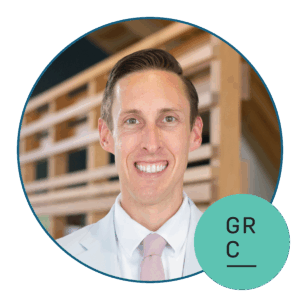
Joshua Lunger
Vice President of Government Affairs
Grand Rapids Chamber