
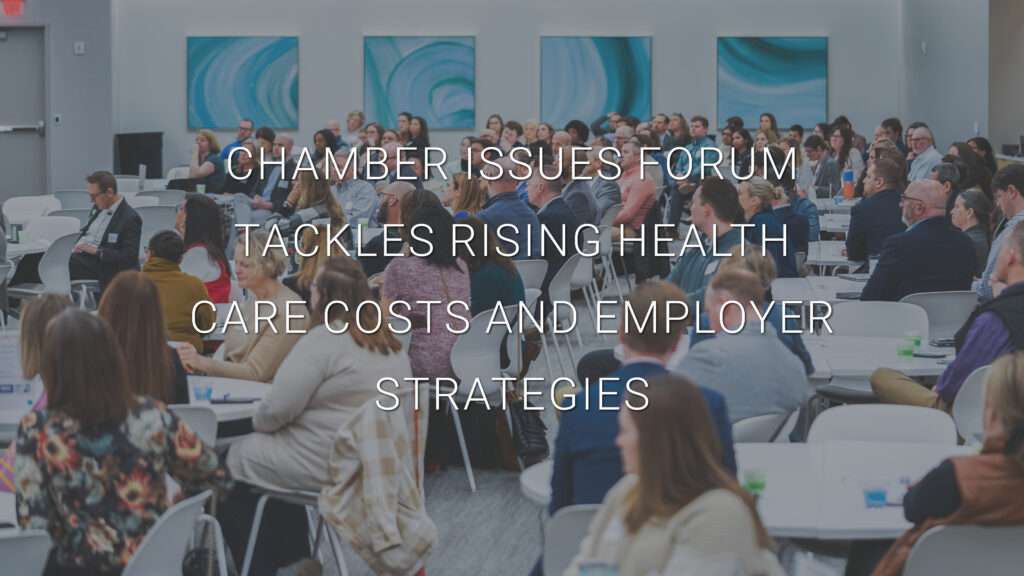
On February 20, the Grand Rapids Chamber convened employers, insurers, and health care providers for a candid conversation about one of the most pressing challenges facing West Michigan businesses: rising health care costs and the future of employee benefits.
The discussion brought together leaders from Corewell Health West, Priority Health, Blue Cross Blue Shield of Michigan, Bank of America, Haworth, Granger Waste Services and the Chamber to explore what’s driving costs and what’s working to manange them and deliver value.
A System Under Pressure — and Adapting
Opening the forum, Josh Kooistra, President of Corewell Health West, shared a system-level perspective.
- Corewell is working to control costs and recently consolidated more than 20 leases into a centralized health campus — an operational move designed to increase efficiency and coordination. At the same time, the system continues to invest in advanced care, including cutting-edge therapies.
Costs:
- 54% of expenses are wages and benefits
- 41% of spending is tied to pharmaceuticals and medical supplies
- High-cost therapies are transforming care while increasing financial strain
As Michigan’s largest employer, Corewell spends approximately $1.6 billion annually with Michigan businesses.
Historically, costs have often been passed through to insurers and employers. Increasingly, leaders acknowledged that this approach is unsustainable and that transformational change — not incremental adjustments — is required.
Access also remains central. Leaders highlighted disparities in life expectancy in ZIP code 49507 and the importance of initiatives like Amplify in expanding equitable care.
What Employees Are Feeling
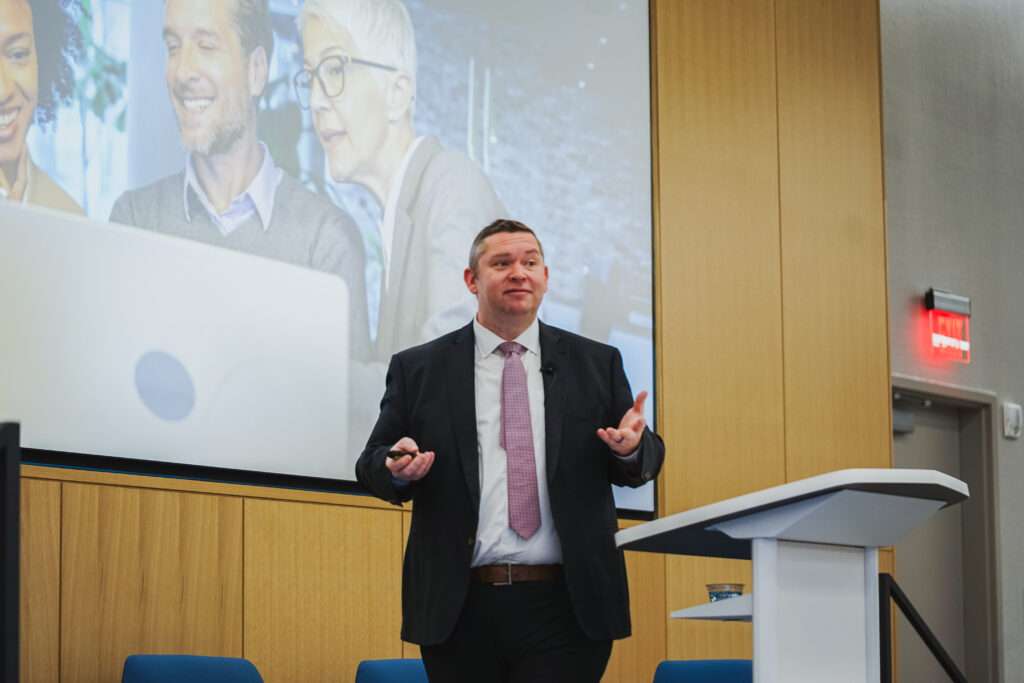
Paul Keifer, President of Bank of America West Michigan, shared insights from the 2025 Workplace Benefits Report, highlighting the human side of the issue.
Some key takeaways included:
- Only 57% of employees are using all the PTO they earn
- Caregiving responsibilities and personal debt are adding pressure
- Many employees do not fully understand Medicare
- Awareness of existing benefits remains low
The message for employers: benefits matter, but understanding and communication matter just as much.
Employees increasingly stay with employers for work-life balance and stability, not just compensation. Making the full value of benefit packages visible is critical.
Reevaluate annually
Contain Costs Creatively
Haworth is piloting AI-supported musculoskeletal care options to reduce traditional PT costs.
Increase Transparency
Granger Waste Services rolled out a base-and-buy-up model — offering a strong high-deductible plan while preserving employee choice.
As a smaller employer, the Grand Rapids Chamber is continuously balancing contributions, plan design, and affordability.
What’s coming next from providers:
- Greater focus on biosimilars to reduce drug costs
- Closer scrutiny of pharmacy benefit managers
- Expanded value-based care models
- Potential Medicaid reductions impacting providers
The shift: from “sick care” to prevention, powered by data and aligned incentives.
Bottom line:
Health care costs can’t be solved by one sector alone. Employers, providers, and insurers must collaborate to manage cost, expand access, and ensure employees fully understand the value of their benefits.
Employers are innovating. Providers are restructuring. Insurers are redesigning models. But lasting progress will require collaboration, transparency, and shared accountability.