
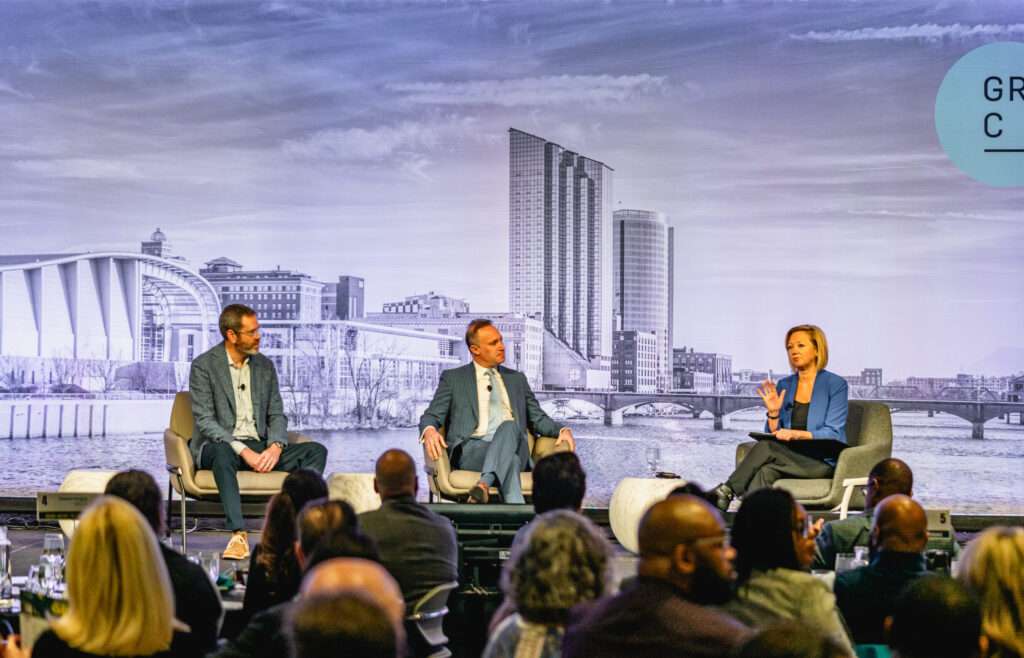
City Builder Panel
How can Grand Rapids better connect people to jobs, housing, and destinations through transit and regional transportation options?
Grand Rapids has made real progress, but we’re still a region where you pretty much need a car to get around. Our transit system works reasonably well within the city, but we need to think bigger and connect the whole region more seamlessly. Better bus frequency, more reliable routes, and smarter connections between communities would make a huge difference for working families and for local leaders who want to create walkable, accessible communities.
We should also be open to creative solutions to create better connections between neighborhoods and job centers. At the end of the day, regional collaboration on transportation isn’t a nice-to-have anymore. It’s essential to make West Michigan a more equitable and competitive place to live and work.
What policies or local regulatory barriers are slowing development and making it harder to build transformative projects?
A major challenge is unpredictability. When you can’t get a clear answer on permitting timelines or know whether a project will get approved, it creates real hesitation around investment. Some of our zoning rules and parking requirements feel stuck in an older vision of what cities should look like, and they make it harder and more expensive to build the kinds of projects Grand Rapids needs.
Historic preservation matters, but it needs to be applied thoughtfully, so it doesn’t block good projects in buildings with limited historic value. The city genuinely wants to be a good partner, and that’s encouraging — but we need a regulatory culture that leans toward finding solutions rather than creating barriers.
What lessons can Grand Rapids learn from cities like Detroit about placemaking, public space activation, and downtown investment?
Detroit teaches us that great cities aren’t just built – they’re intentionally curated and maintained. It’s not enough to have a beautiful public space if nothing is happening in it. Detroit has done a tremendous job creating reasons for people to show up downtown year-round, like seasonal events, local vendors, art installations, and community gatherings that make people feel like the city belongs to them.
Grand Rapids has immense opportunities, especially as exciting public spaces are about to come online. We need to be bold about activating our public spaces with community-driven programming and giving our community the chance to shine.
And none of that works if people don’t feel safe and the spaces aren’t well cared for. Cleanliness, lighting, and a sense of security aren’t extras. They’re the foundation. Businesses scout locations. Young professionals visit on weekends before deciding to move. Visitors share their experiences online. The condition of our public spaces shapes all of those impressions. Grand Rapids needs to make sure placemaking investment reaches neighborhoods across the city, not just the blocks most visible to outsiders.
Who are Grand Rapids’ biggest competitors for talent, and what role do higher education institutions play in attracting and retaining that talent?
We’re competing with cities like Columbus, Indianapolis, and Madison for the same pool of talented young people, and all of them are working hard to make their case. Grand Rapids has a great story to tell, and we need our universities to be a bigger part of communicating that. We have a robust higher education community in West Michigan that bring thousands of students into our community every year. The question is whether those students leave feeling connected to Grand Rapids or just passing through. Internships, community involvement, and genuine engagement with the city’s future can make the difference between a graduate who stays and one who heads to Chicago.
Looking ahead, what should we expect for the next 10 years of growth and development in Grand Rapids?
It’s a really exciting time to be in Grand Rapids, because we’re on the verge of realizing a lot of carefully laid plans. But we cannot rest on our laurels – we have to keep looking forward.
We’re going to see more demand for living in the urban core, more creative housing solutions, and continued growth in sectors like healthcare and life sciences that are already putting us on the national map. Sustainability and resilience are going to become real priorities as the city responds to changing expectations from residents and businesses alike.
The biggest factor in how good the next decade looks will be whether our region can work together. If Grand Rapids, its neighboring communities, and Kent County can align on the big questions around housing, transportation, and economic development, the upside is enormous.
Data Center Panel
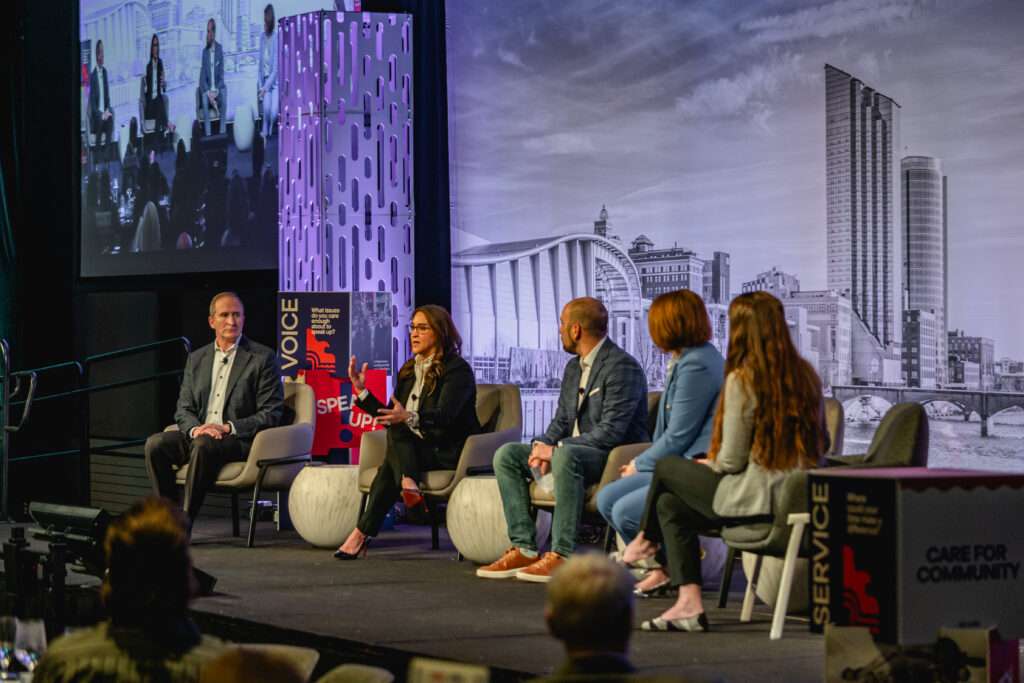
What are the actual impacts of data centers on local infrastructure, including water use, land use, and noise?
From the specific requirements placed on the development from local governments to the natural features of a particular site, each data center facility is unique to the location it is sited in.
- Water: Modern data centers use closed-loop cooling systems that recirculate water in amounts comparable to one large office building or apartment complex (50,000–75,000 gallons/day). Under existing Michigan law, facilities must connect to regulated municipal water systems, not private wells, and are subject to local and state environmental review.
- Noise: Noise levels are comparable to a typical office or commercial building. Equipment runs inside enclosed buildings, and backup generators only operate during emergencies or required testing. All operations are subject to local, state, and federal noise regulations.
- Land use & other impacts: Site plans must comply with local zoning and environmental standards – including setbacks, landscaping, and screening to reduce visual and noise impacts on neighbors. Construction brings a temporary traffic increase. However, once the data center is operational traffic is typically lower than most commercial or industrial facilities.
Learn more about specific real world case studies around the country here. [link: https://www.wmdatacenters.org/examples-from-other-communities]
How do data centers fit into Michigan’s clean energy goals and renewable energy strategy?
Under Michigan law passed in 2024, data centers must demonstrate that at least 90% of their electricity will come from clean or renewable sources in order to receive a sale and use tax exemption. This requirement can be achieved through on-site generation, utility contracts, or participation in approved green energy programs. This law also requires that facilities are certified under one or more green building standards, working toward lowering energy consumption overall. [reference link: https://www.michiganbusiness.org/services/data-center/]
All regulated utilities in Michigan are required to comply with Michigan’s 2023 clean energy laws, regardless of what customer they are serving. [reference link: https://www.michigan.gov/mpsc/commission/workgroups/2023-energy-legislation]
What opportunities exist for local businesses to work with data centers once they are operational?
In West Michigan, we have many qualified local contractors, service providers and suppliers that are already working with data centers in Michigan and across the country to support critical digital infrastructure.
During the construction phase of the project, data centers require significant investment in labor, materials, and equipment – with much of this spending focused on local businesses. The Anderson Economic Group estimates that construction-phase will generate hundreds of millions in economic output, with the possibility of significantly more based on the size of the data center facility.
Beyond the construction phase, data centers require continued operations and maintenance support. That same report indicates that a small data center facility with a 40-year life cycle will contribute over $1 billion in economic output over the lifespan of the facility, with much of this expenditure happening with local businesses.
Reference link: Here
How can communities ensure data centers deliver meaningful community benefits, or help fund or support broader community transformation and infrastructure improvements?
Data centers provide meaningful financial benefits to local communities through property tax revenue. Each facility could add $30 million per year in local property tax revenue, giving local communities a unique opportunity to think innovatively about how to make meaningful improvements for their residents. This could look like several things: investments in public schools, roads, police and fire, libraries, parks, water and sewer infrastructure – or even lowering property rates.
Over time, these large investments can reduce the tax burden on residents and existing businesses, while strengthening municipal budgets, supporting infrastructure improvements, and providing greater long-term financial stability for the community as a whole.
Specific to projects in West Michigan, Microsoft has committed to investing in local communities. One part of this is not asking for property tax abatements from local communities so that these benefits are realized for local residents. Beyond property tax revenue, Microsoft has also committed to investing in local AI training and nonprofits. Learn more about Microsoft’s Community First AI Infrastructure here:
Reference link: Here
Bipartisan Panel
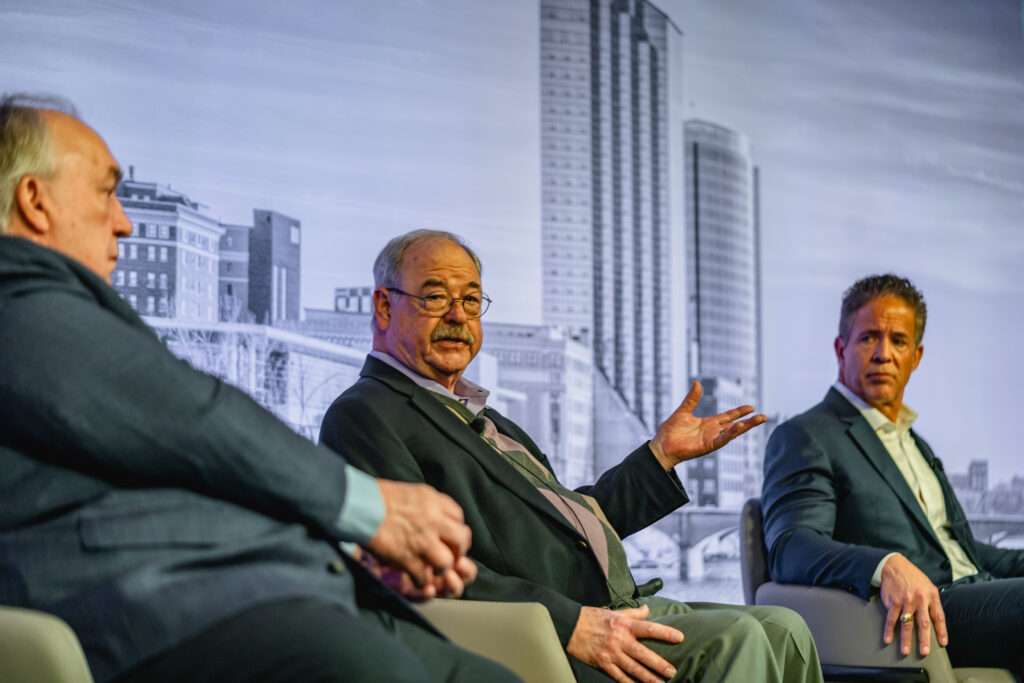
Is bipartisan cooperation still possible in today’s highly polarized political environment?
Yes, but it is a choice. A bipartisan effort took place last year to pass a new road funding plan. The state solution to the tipped minimum wage issue was a big bipartisan effort. Other legislative introductions have been bipartisan. It is a choice to work together behind the scenes, despite all the noise on cable news and social media.
How can elected officials rebuild trust in democratic institutions and the election process?
Let’s start with our county and local clerks. Our polling has shown repeatedly that people know and trust their local clerks. They are who run Michigan’s elections. Our election system is decentralized and therefore resistant to election fraud. But voters need to be educated about our process and safeguards. That is the mission of our work on the Democracy Defense Fund.
How can leaders encourage more civil political discourse and reduce the tone of political rhetoric?
Keep it local. Work with your local elected officials. Civic leaders. School boards. At church. Chamber staff and leaders. Meet with people over coffee. It starts with you!
How can citizens and leaders work together to reduce polarization and strengthen civic engagement?
Start by talking to your neighbors. Attend office holder coffee hours. Get to know civic leaders in your community. But do it in person. Because cable news and social media is currently serving as the easiest path for keyboard warriors to take control of our attitudes about others. When we set the phones down and talk with our community, we are reminded we have a lot more in common than we think. We all want better schools, lower taxes, higher incomes, better roads and opportunity for our children.