
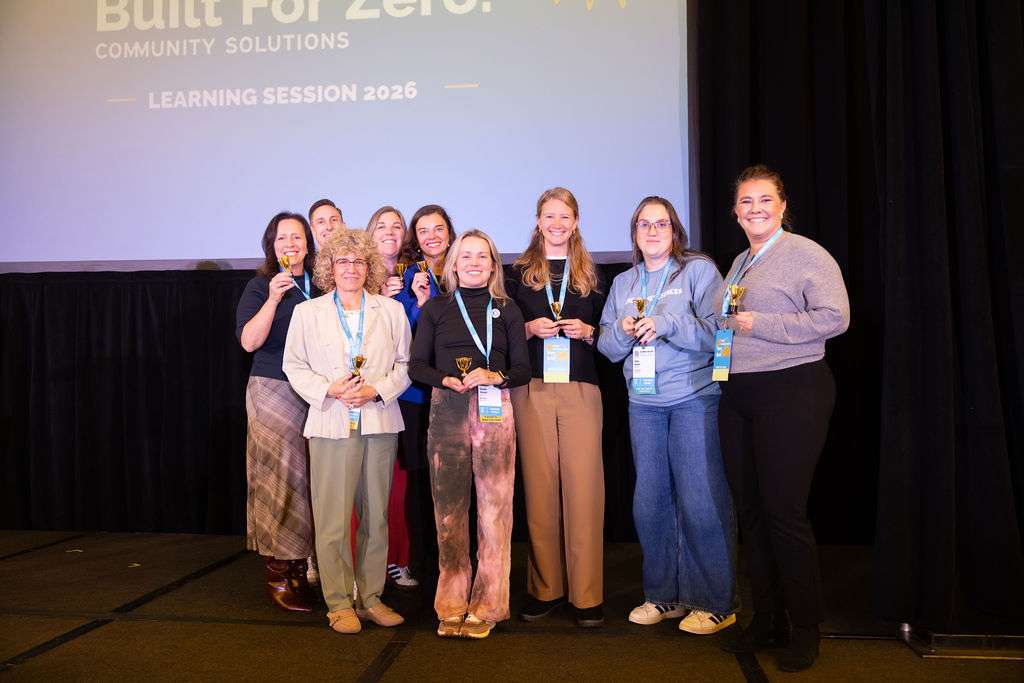
The Kent Homelessness Coalition joined Bulit for Zero in 2020. A board member of the Grand Rapids Chamber Foundation, Dan Meyering, advanced awareness of the opportunity and covered the fees for Kent County to join the growing network that has become a foundation for improving homelessness outcomes by:
- Using a by-name list to provide a real-time, person-specific understanding of who is experiencing homelessness
- Pairing housing with supportive services and clear expectations
- Bringing cross-sector leaders together around measurable outcomes, not just activity
Over the last several years, the Kent Homelessness Coalition has significantly improved their ability to collect and use quality data, strengthened their ability to convene groups around a focused purpose, and launched the successful 100 in 100 efforts that the Chamber was proud to support.
In October, I participated in Community Solutions’ annual Built for Zero (BFZ) learning session in Seattle with members of their team alongside local provider and philanthropic leaders.
At the Learning Session, Kent County was recognized for four notable successes:
- Receiving the “Outstanding Performance by an Ensemble” Award, recognizing a community leading reductions through collaboration across business, health care, philanthropy, and service providers
- Being 1 of 32 communities to achieve a true reduction in a population experiencing homelessness (chronic)
- Maintaining 12 months of uninterrupted, quality by-name data reporting—with Kent County the fastest of 25 communities to report by a wide margin
- Being 1 of 16 communities to achieve quality data for a new population through its youth by-name list
Key Learnings; What It Means for Grand Rapids
- Community Solutions/Built for Zero now works with more than 100 communities. They shared the results of a study of five years of homelessness work in these communities and presented seven key learnings from the places making the most measurable and visible progress in reducing homelessness.
Seven Key Learnings
1] Invest in clear governance and authority.
– A dedicated, neutral coordinator turns data into decisions, and leadership is spread across partners, so progress isn’t tied to one person.
2] Make goals shared, measurable, and institutional.
– Specific targets, public commitment from leaders, and a formal commitment to give partners a reason to coordinate and hold each other accountable.
3] Make data a decision tool, not a reporting requirement.
– A real-time, by-name list shows who is homeless now, who is entering and leaving, and where people get stuck. What sets communities apart is the capacity and culture to act on it.
4] Use multiple measures of success to keep improving.
– Track system, housing, and population outcomes; test changes quickly; and share ownership of results through case conferencing and public reporting.
5] Build partnerships of depth over breadth.
– Communities consistently name cross-sector collaboration, including business, as the most important factor in their success. The key is moving from presence at the table to written roles and real commitment.
6] Treat housing as a system connected to the by-name list.
– Coordinated entry should link to every available unit, with landlords, housing authorities, and developers at the table. A well-run system manages flow, but it can’t end homelessness without housing.
7] Visible wins build political will and public narratives.
– The public judges progress by what it can see. Momentum lasts when reductions come from housing people, and when leaders commit publicly to a clear definition of progress
- Our approach was validated. The strategy underway between the Kent Homelessness Coalition and Downtown Pathways Project employs leading practices that we believe will result in sustained outcomes. That doesn’t mean we can’t improve and consistently work to strengthen our work. The learnings closely align with our partnership’s values: acting with urgency, measuring results, and showing our work. The role of the business community is especially clear. Your continued presence, voice, and partnership are part of what makes this work succeed.
- It was refreshing to hear leading experts emphasize the need for business leadership to “Get S* Done,” the importance of visible progress, and the critical connection between housing and services in sustaining reductions in homelessness.
- Our teams spent an afternoon assessing our system and the Downtown Pathways Project against these learnings and discussing where we need to go next. The candid conversation about our strengths and opportunities was valuable. The Downtown Pathways Project team will meet in the first week of December to establish 2027 goals and the Q1 objectives that will move us toward them.
There is more work ahead. Interested in learning more or getting involved? Email me at josh@grandrapids.org.