Opportinity In Office Conversion: GR’s First Office-to-Housing Project
West Michigan is facing a housing crisis – but what if the solution is hiding in plain sight?
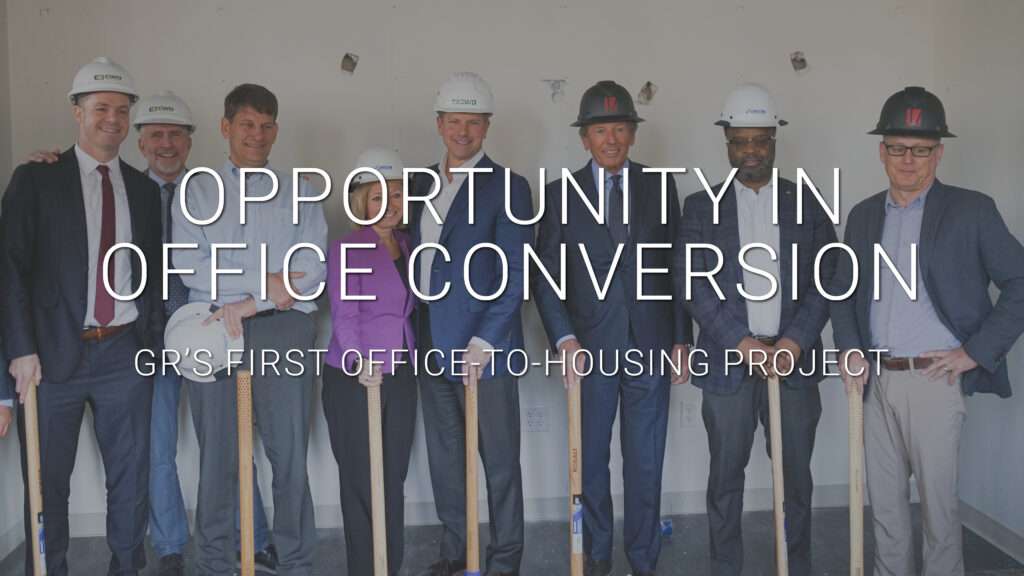
In downtown Grand Rapids, the former Fifth Third Bank building at 111 Lyon St. is undergoing a first-of-its-kind transformation, converting an old office building into residential apartments.
Scheduled for completion in 2027, the development will bring 141 apartments to downtown. It will also offer amenities like a gymnasium, pickleball court, indoor pool, and sports simulators.
“Our vision for 111 Lyon St. is to establish a community,” said Sam Cummings, principal and managing partner for the project. “With this conversion, we will increase affordable housing, decrease office vacancy, and support services and retail, and ultimately increase community vibrancy.”

A Win for Policy-Driven Innovation
This breakthrough wouldn’t be possible without the Grand Rapids Chamber’s advocacy.
In 2023, the Chamber led the charge for key legislative updates, expanding eligibility for tax increment financing (TIF) to include residential projects.
These tools help close the gap between high construction costs and market rents, making projects like this a reality.
“Housing Tax Increment Financing is already providing meaningful housing solutions,” says Josh Lunger, Vice President of Government Affairs for the Grand Rapids Chamber. “Across West Michigan, builders are using this tool to create new condos, apartments, single-family homes and repurposing existing structures into vibrant new living spaces.”
Leading the Nation in Housing Solutions
Grand Rapids is quickly becoming a model for cities looking to reimagine their downtowns. By embracing public-private partnerships, leaders are proving that policy and leadership can ensure everyone has a place to call home.
“It makes me incredibly proud that here in Grand Rapids, we’re leading the state,” continued Cummings. “My goal is for our city to lead the nation in solving these complex issues and making our region one of the best places to live and work.”
GR& RIVERFRONT
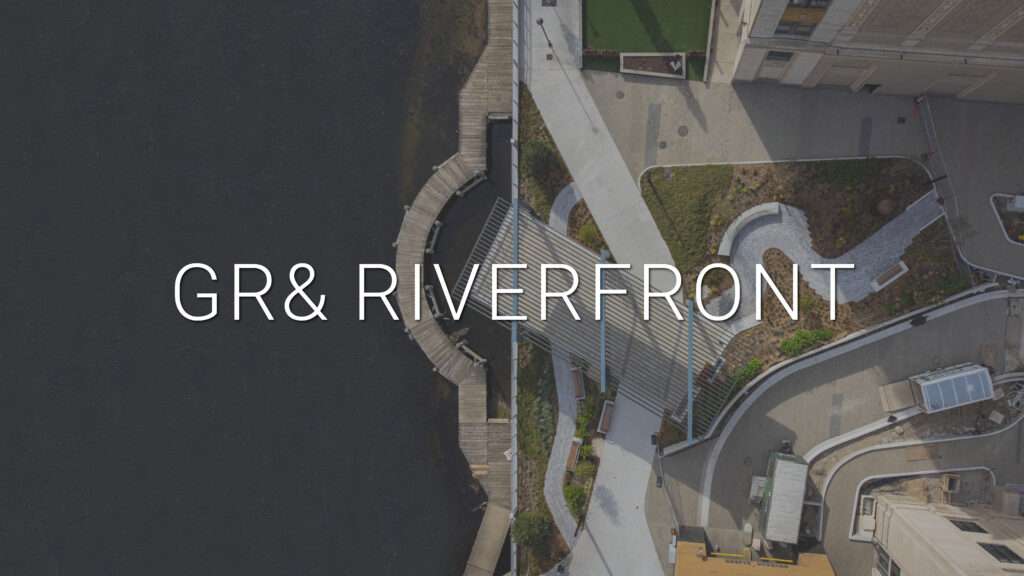
The Grand River has always been at the heart of Grand Rapids. Now, it’s evolving into the centerpiece of one of the most ambitious urban revitalization efforts in the Midwest. This vibrant, interconnected destination brings people together, supports inclusive growth, and celebrates the city’s past while shaping its future.
GR& Riverfront serves as a hub for the news, stories, and sights along this transformational downtown corridor. GR&, short for “Grand” and symbolized by an ampersand that flows like the river itself, represents more than just development. It’s about unity, momentum, and possibility. This is a city on the rise, turning its riverfront into a place where people can live, explore, and thrive.
From the sweeping redesign of gathering spaces like Lyon Square to the transformational renovations at cultural landmarks like the Grand Rapids Public Museum, every project is part of a larger story: one where history, culture, and community build upon what came before and set the stage for what’s ahead.
At the heart of this riverfront renaissance are two catalytic developments redefining how Grand Rapids gathers, celebrates, and connects: Amway Stadium and the Acrisure Amphitheater. From the roar of the crowd to the rhythm of live music, these destinations aim to drive economic growth, cultural energy, and community pride.
With inviting green spaces, walkable connections, and vibrant mixed-use developments taking shape, the riverfront is becoming a place where residents and visitors alike are able to flow into downtown. It’s a transformation that reflects the city’s creative spirit, collaborative drive, and commitment to inclusive growth.
The GR& Riverfront isn’t just about what’s being built. It’s about what’s being made possible – for today’s residents and tomorrow’s generations. As Grand Rapids looks to the future, the riverfront stands as a powerful symbol of where we’ve been, and more importantly, where we’re going.
For everything happening along the GR& Riverfront, visit www.grandriverfront.com.
Advocacy In Action: A Win for Business on ESTA Reform
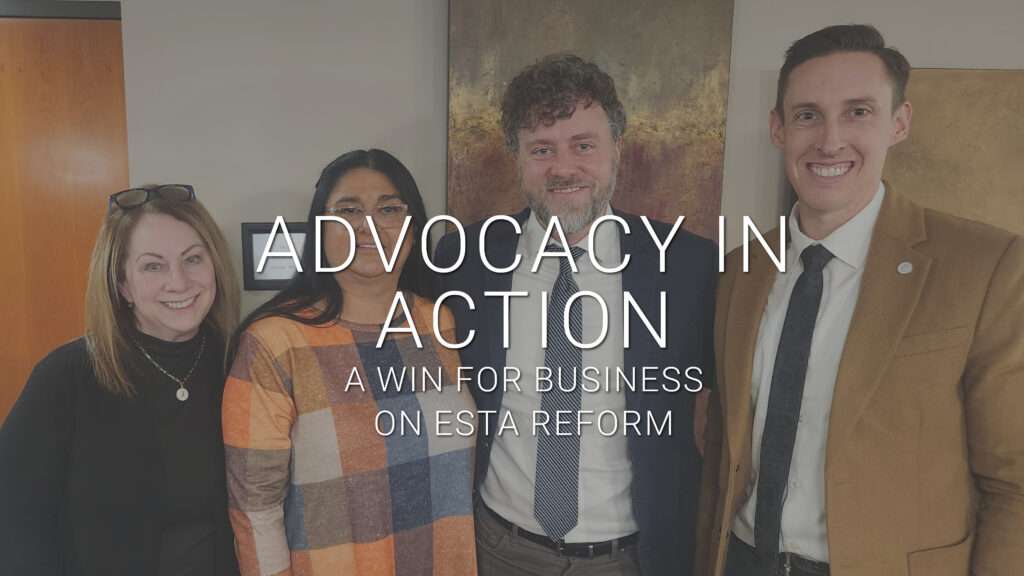
Thanks to your passion, persistence, and powerful storytelling, the Grand Rapids Chamber is proud to celebrate a major advocacy win—improvements to the Earned Sick Time Act (ESTA). Because of you, Michigan lawmakers got the message and made changes.
Hundreds of Chamber members stepped up—writing, calling, and meeting with legislators to share how ESTA would impact your workplaces, teams, and missions. Your efforts made a difference, and critical improvements were made before the law took effect on February 21. Together, we helped deliver a more balanced, practical approach to paid sick leave policy in Michigan.
This success isn’t just a win for the Chamber—it’s a win for you. You’ve helped preserve flexibility for employers, especially small businesses and nonprofits. In the words of Joe Haveman from Hope Network, “The Chamber should take a victory lap. You have saved non-profits and small businesses. Hope Network has gotten our dues worth and more out of the Chamber. THANK YOU.”
We also want to recognize our incredible partners across the state who joined forces to elevate this issue and keep pressure on lawmakers. Grassroots advocacy—driven by real stories from real employers—proved to be the game-changer.
Of course, our work doesn’t stop here. From helping you navigate the new ESTA requirements to staying on top of tipped wage changes, housing, childcare, taxes, and infrastructure, your Chamber remains a dedicated partner, advocating for the policies that keep our region’s business climate strong and growing.
If you need help interpreting ESTA or want to connect with lawmakers about other pressing business challenges, our team is here to help. Visit the Save MI Small Business page on our website for ongoing updates and resources.
This win is a testament to the power of the business community. You are the most effective advocates. Your voice matters—and together, we’re shaping the future of West Michigan.
Let’s keep moving forward—together.
Generations Strong: The Master Finish Story
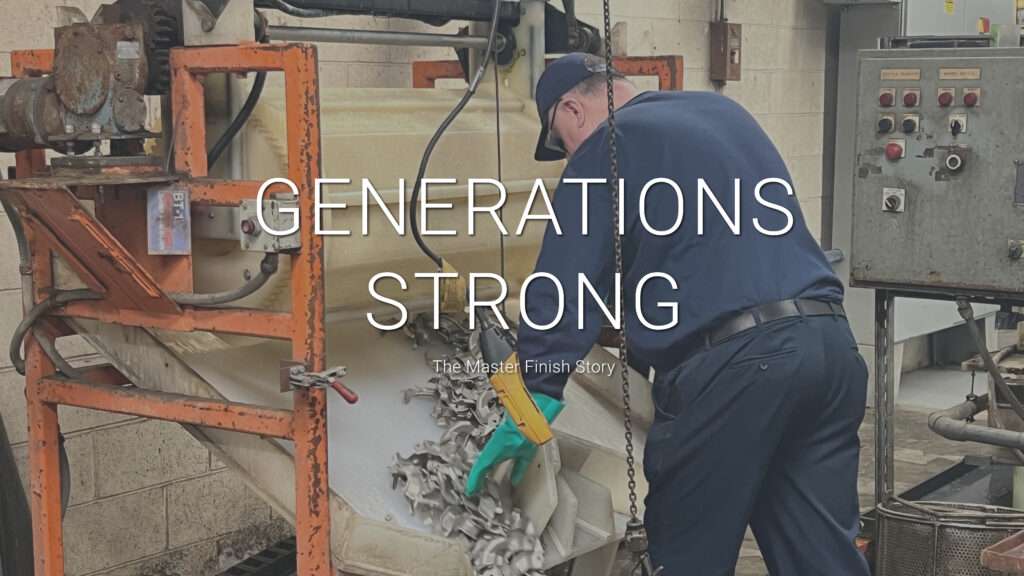
Tell us about your business and the family members involved.
We were founded in 1959 by our grandfather, John Mulder. Today, we—Aaron and John—continue the family legacy. In the second generation, the business was run by our dad, Dale Mulder, uncle Mike Mulder, and cousin Doug Roetman.
We serve metal forming and machining companies with chrome plating for industries like automotive, plumbing, and construction, creating decorative finishes.
What are you most proud of as a family business?
We are most proud of our team, the men and women that we call part of the Master Finish family. We work hard to build a culture of teamwork, honesty, innovation, and service in all we do at our company. We work hard to learn and grow together leveraging everyone in ways where they are playing to their strengths. We find ways to celebrate together, and we suffer and mourn together.
What innovations or industry changes are you most excited about?
Over the years we have seen many changes in the automotive industry. We’re proud to lead the shift to trivalent chrome—especially dark black finishes—for a high-end look with lower environmental impact and safer chemistry.
What opportunities are you finding within your current challenges?
Today we are serving the global community and are facing a challenge of tariffs and their impact on our customers. We are seeing some great new opportunities to bid on programs historically made overseas, though others are delaying decisions amid uncertainty.
What’s the best business or leadership advice you’ve ever received?
Dale taught us many great things about the company, industry, and life. We’ve been using EOS for nearly 10 years—it’s been a great system for keeping us moving forward and improving our company.
What makes West Michigan a great place to do business?
West Michigan’s business community is highly collaborative and through Family Business Alliance and the GR Chamber we’re able to learn best practices from a variety of industries. At Master Finish, we serve sectors ranging from medical and automotive to furniture and consumer goods, allowing us to gain insights from a broad and diverse customer base.
Why would you recommend that a business get involved with the Family Business Alliance and the Chamber?
Business is not conducted in a vacuum. Success relies on strong networks of vendors, customers, and peers. We’ve found great value in the educational events and peer groups offered by Family Business Alliance and the GR Chamber—they help us stay informed, connect with others, and find collaborative solutions to shared challenges.
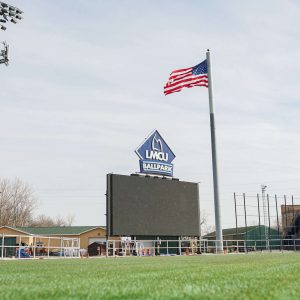
Revitalizing a Legacy: LMCU Ballpark
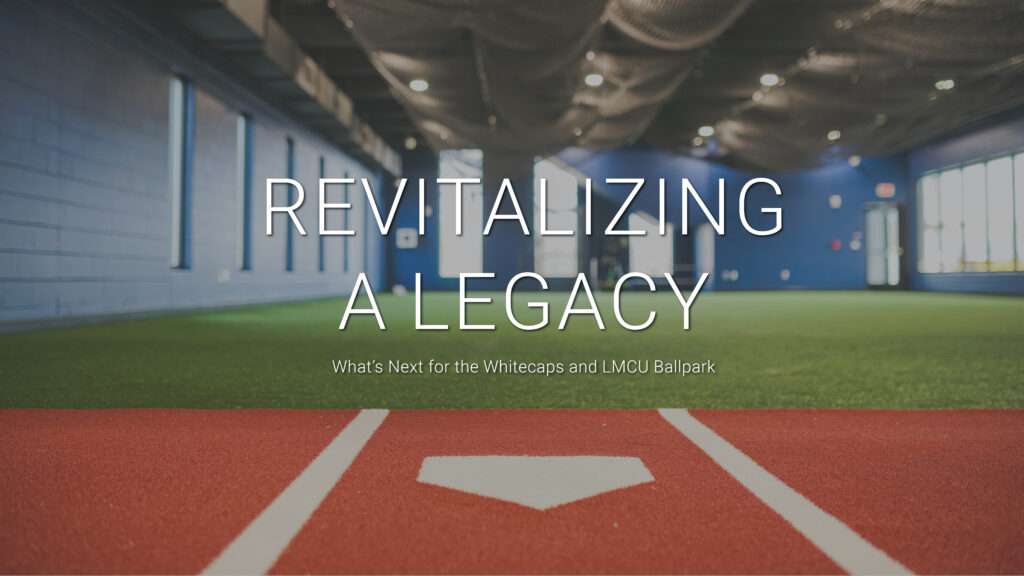
When professional baseball returned to West Michigan in 1994 after a 40-year hiatus, it wasn’t just about the game—it was about proving that Grand Rapids could be a sports town. And it worked. Thirty years later, that legacy is evolving under the leadership of second-generation CEO Joe Chamberlin.
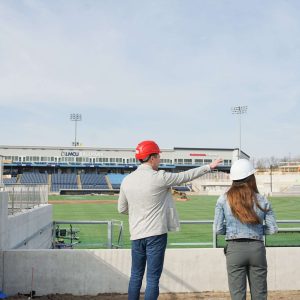
“We’re in the middle of a multi-phase plan that completely reimagines the ballpark for the next 30 years,” Joe says of the transformation underway at LMCU Ballpark, one of the few privately owned stadiums in minor league baseball. “We’re building a place that feels brand new again.”
The updates include new terrace seating, a 360-degree concourse, and modern hospitality spaces—doubling the stadium’s group capacity, and creating fresh experiences for both longtime and first-time fans. Players also benefit from the upgrades with access to top-tier training amenities, including a new weight room, expanded locker room, and enhanced batting and pitching areas.
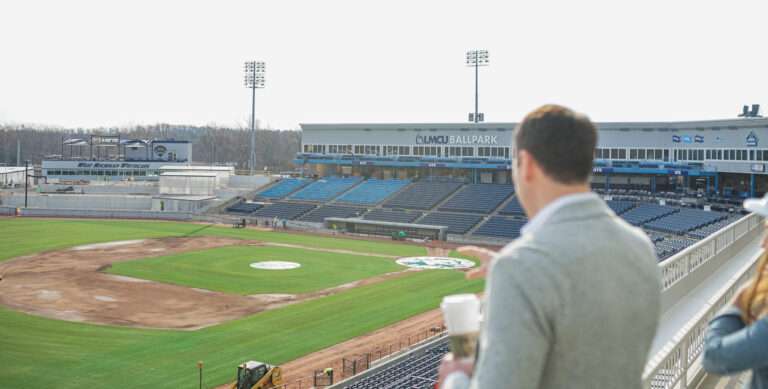
The Whitecaps have also taken over GameTime, the adjacent fun park, to create a seamless, family-focused destination. “It should be a place kids want to stop on their way in or out of a game,” Joe says. “And now we get to put our stamp on it.”
With more than 500,000 visitors expected annually between baseball and entertainment, the impact goes beyond the stands. The Whitecaps generate nearly $40 million in economic activity each year and provide close to 1,000 seasonal jobs—or as Joe puts it, the best first job in town.
“We feel a huge sense of responsibility for this place,” says Joe. “It’s like our second home.” As Grand Rapids celebrates 175 years, this ballpark transformation reflects what makes the region thrive; entrepreneurship, family legacy, and an eye on the future.

Jess Jones
Director of Marketing & Events
Grand Rapids Chamber
Global Talent with Local Impact
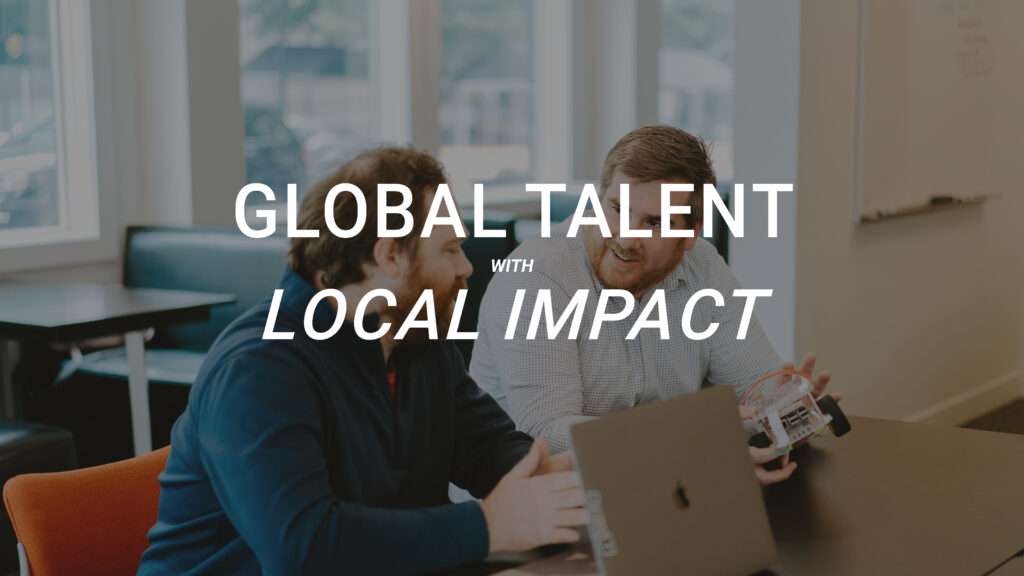
With multiple degrees and over a decade of engineering experience in the U.S. and his native country India, Shiva Sundaram’s passion for entrepreneurship is contagious: “I like building anything that will help people.”
Sundaram is a founding member of an autonomous robotics start-up based out of Grand Rapids, where he heads up product design while serving as a visiting faculty member for Grand Valley State University. He explains, “I have only been here three months, but we’ve made exponential progress because I am here in person. My team loves to work hands-on together as engineers. The Global EIR program got me to the US.”
The Global EIR (Entrepreneur in Residence) program is one of two initiatives that Global Detroit, an economic development non-profit, conducts across Michigan. As members of the President’s Circle at the Grand Rapids Chamber, Global Detroit’s growing presence in West Michigan underlines the region’s dedication to investment and the irreplaceable role of immigrants in our enrichment and growth.
Global Detroit plays a necessary role in bringing experts like Sundaram to West Michigan, enriching the local community through his expertise and enthusiasm. The entrepreneurial spirit that inspires Sundaram to provide expert mentorship to Senior Engineering students at GVSU, really takes off in his start-up team working on the timely and influential goal: design and create U.S. owned and manufactured Autonomous Mobile Robots for warehousing.
The excitement of reaching this goal is palpable in Sundaram’s words and actions: “There is momentum now that I am here because we can see something happening. I created a bunch of concepts. We are building our prototype; we should have a bot by the end of April.”
In addition to the Global EIR program, Global Detroit supports the region with the Global Talent Retention Initiative, which works with local employers to hire and retain international students from Michigan universities. Companies are discovering that the advantages of hiring global talent far outweigh any perceived challenges. Bill Osborn, Director of Technical Recruiting at Bravo LT, connects international talent with organizations in Michigan needing to get technical projects completed.
“We are getting challenged on hiring right now, so we look to a more international delivery model,” Osborn explains “I think West Michigan is finally asking – can’t we find a way to be ourselves but also leverage international talent. I ask people – What is the cost of having roles unfilled because you don’t want to look at another option?”
Osborn has hired international professionals at both entry and expert levels. He has experienced the benefits both personally and for his company Bravo LT, a local provider of IT and Technical services– “We’ve hired people of similar ranges, both international and domestic, and you see maturity from the international students. You get people who are wise beyond their years.”
“I am a huge proponent of the American Dream,” Osborn explains further. “It’s never easy for the first immigrants. I’m the first college grad in my family, and we are multiple generations in. International students are ahead in that, they speak multiple languages, they have toughness and grit. How can we create pathways for them to access that American dream so they can contribute back?”
Global Detroit works to pave that pathway for local employers via consultation on affordable work authorization options (like OPT, which requires minimal paperwork and negligible cost) and access to an extensive database of available and highly qualified International Student graduates. Funded by the state of Michigan, Global Detroit connects students from local universities for site visits or meetings with local employers, filling local employment gaps with motivated individuals who bolster our companies with unique life experiences and skills.
Though from different backgrounds and industries, Bill Osborn and Shiva Sundaram both embody the traits that facilitate growth for West Michigan. They embrace inevitable change. They love and support their community and want to see it succeed. And, they see opportunity to really build something here.
Global Detroit would like to extend that opportunity to employers in Grand Rapids wanting to connect with international talent or partner on expanding the start-up ecosystem in West Michigan.
To find out more
www.globaldetroitmi.org or contact:
Rena Dam
Global Talent Retention Initiative, Employer Relations
rena@globaldetroitmi.org
Drew Johnson
Global Entrepreneur in Residence, Program Manager
andrew@globaldetroitmi.org
Phil Koch
Global Talent Retention Initiative, University Relations
phil@globaldetroitmi.org
Small Details, Big Impact: How to Create Memorable Events

Have you had a moment before where you walk into a meeting room, a banquet hall, or even while hustling to a meeting across town, and you hear your name from a familiar face? Or even better – a compliment?! That feeling of being seen and known sinks in, and let’s be honest, it feels good. We all have a desire to feel a sense of belonging, and in events, we have the unique opportunity to create a space that fosters that. An event that is intentional and engaging, even in the smallest of details, goes a long way and doesn’t leave attendees with just another event added to their calendar, but an experience that leaves a lasting impact and a sense of, “I am seen.”
So, how do we get here? Or better yet, what are some ways we can create this environment? Let’s dive in!
Start with the Welcome – As mentioned earlier, the experience begins with those first few words of “Hello.” Similarly, give attendees a warm welcome by greeting them with celebration and without hesitation. I like to say to our team, “Bring your name tag, business cards, and of course, a smiling face!” I’ve witnessed it before where one smile can change someone’s entire event experience.
Engaging the Senses – This one is a fun one, especially for those who enjoy design! The vibe of an event goes a long way. Think about how the entire space and layout of an event can engage the senses. Yes, this is beyond the visuals and taps into sound, taste, touch, and smell. This could include unique and accommodating food and beverage selections, comfortable seating arrangements, or even a signature event scent, so attendees remember the moment!
It’s All in the Details – Do you want to give attendees that “wow” factor? It begins with intentional details. How can you create an inclusive event design through layout and having interpreters, closed captioning, or translation services? Are there ways you could feature a local business in an attendee gift or part of the catering order? The options are endless and require some brainstorming!
Create the Opportunities – Humans crave connection. Open networking time is great, but opportunities to go deeper happen through icebreakers, table discussions, and even collaborative table activities where everyone works towards a common goal or celebrates one another.
Gather Feedback & Grow – This goes beyond the event. Taking in feedback and adjusting is not the only way to grow. Maintaining a connection with event attendees is a way to nurture the relationships that started in the room. Go ahead and share resources, celebrate someone’s professional and/or personal wins, reinforce intentionally – that’s what will separate your event from another.
In an ideal world, it would be great to pull out all the stops for an event, but factors such as budget, logistics, venue, and even weather can limit our options. I want to challenge us though, whether you are an event professional or just someone looking to enhance your weekend dinner parties, take the time to go the extra mile in getting to know someone. Give them that compliment. Ask them about their proudest moment from the week. It’s the small acknowledgements that remind people, “I am seen,” and that’s what creates a space of belonging and an event to remember.

Shawnee Eder
Senior Events Project Manager
Grand Rapids Chamber
Housing Gap Narrows in West Michigan
Changes Highlight Potential Impact of Adding Housing from Middle Incomers
Grand Rapids, MI: A new 2025-2030 Housing Needs Assessment prepared for Housing Next shows the overall housing gap narrowed slightly in Kent County and that there is significant potential to improve housing access by adding housing options for middle income households.
Kent County added more than 6,000 new housing units from 2022 through 2024. This contributes to housing needs decreasing slightly in Kent County, which is still anticipated to outpace the state in population and household growth.
Kent County and local jurisdictions have led the state in a number of ways to address the housing shortage. This includes the creation of a revolving loan fund to provide lower interest rates, financial support to help cover the costs of strategic zoning changes, and a county-wide brownfield redevelopment authority as an option to support infrastructure and other reimbursable costs.
Kent County is expected to continue to grow, with the report predicting 6,371 new households by 2030 (30% in the City of Grand Rapids and 70% in the remainder of the county).
“We’ve partnered with Housing Next and the private sector to take real, actionable steps—and we’re already seeing the impact,” said Ben Greene, Chair of the Kent County Board of Commissioners. “As the landscape continues to shift, it’s critical that we stay focused on the data and keep adapting to meet the needs of both families and job creators in our community.”
Key Trends
Overall: Kent County is facing a rental housing gap of 11,775 units and a for-sale housing gap of 22,139 by 2030 for a total of 33,914 units.
- Both Grand Rapids and the remainder of Kent County saw a slight decrease in housing needs for rental units which was influenced by the significant residential development added to the market.
- The estimates indicate there is potential support for a variety of residential development alternatives in both the city of Grand Rapids and the balance of Kent County.
City of Grand Rapids
- Rental: The estimated overall gap of rental units fell 12.1% to 6,990 units since the 2022 study influenced by the notable residential development that has occurred in Grand Rapids. o The greatest need (1,927 units) is for households earning between 51% and 80% of area median income (AMI).
- For-Sale: The estimated overall gap of for-sale units is up 2.9% to 6,333 units.
- The greatest need is for households earning between 80% and 120% AMI.
Kent County (minus Grand Rapids
- Rental: The estimated overall gap of 4,875 units, down from 5,107 in 2022.
- The greatest gap is also for households between 50% and 80% AMI.
- For-Sale: The housing need increased to 15,806 units from 15,486.
- The vast majority of for-sale need is for households earning 51% AMI or greater, and the largest single gap is for 120%+ AMI.
“The City of Kentwood has added roughly 800 homes since the last census and has hundreds more in the building or planning process,” said Mayor Stephen Kepley. “It’s a competitive, yet stable market that reflects the rising appeal for families, and we continue to focus on how the city can support a high quality of life for current and future residents.”
“It takes intentional and consistent work to address our needs. We have made it a priority to be innovative to promote housing for all residents,” said Mayor David LaGrand of Grand Rapids. “We have made progress with large scale, dense mixed-use projects as well as infill housing projects. I am glad to see partners countywide collaborating and finding ways to step into opportunities to support.”
Housing Next
“Fortunately, between two-thirds and three-quarters of the overall housing needs can be solved using existing tools available at the local level,” said Jen Radaz, Sr. Manager for Housing Next. “This includes allowing smaller homes on smaller lots, support for gentle density near major corridors, and utilization of the new housing tax increment finance tool.
While tools like low-income housing tax credits can provide deeply affordable housing options directly, adding market rate housing and options for middle income households provides ‘step-up’ options for their next opportunity. This opens up existing housing that is more affordable than new construction and doesn’t require subsidy,” continued Radaz.
Housing Next’s efforts to support local communities in prioritizing light touch density along and near key corridors, as well as our support to local communities interested in executing modest zoning reforms will be key to meeting our regional housing shortages. Housing Next is focused on catalyzing specific corridor redevelopment opportunities that can support existing businesses and further expand walkable, amenity-rich housing options. This includes:
- Identifying opportunity rich areas that are already served by municipal infrastructure and where land is significantly underutilized.
- Providing simple to use examples to improve local zoning for a variety of housing options to meet our regional needs.
- Supporting local communities with technical assistance to modify policies and work in partnership with regional developers.
“The past three years of new construction have helped stabilize housing needs, yet the region must double down on smart growth strategies—like gentle density and strategic zoning—to unlock more options for all income levels,” said Ryan Kilpatrick, Lead Consultant for Housing Next. “As a result of scarcity, we have seen rent and home prices increase faster than wages. Until we solve for housing scarcity, we will continue to play catchup and the backlog will persist. While we are working on housing supply at all price points, we will need targeted support for low- and moderate-income households to ensure they can remain stably housed,” continued Kilpatrick.
Chamber to Share Additional Details Friday
The Grand Rapids Chamber’ will cover new data, upcoming bipartisan legislation, and how the industry is innovating on Friday, June 20. Limited walk-in seats are available.
- Housing Next will release the new 2025-2030 Kent County Housing Needs Assessment and highlight the top trends.
- A panel of bipartisan state legislators will discuss the work they are doing on new housing legislation.
- Industry experts will discuss the latest challenges and how they are innovating to address them.
“When markets are empowered through smart policy—streamlined permitting and allowing for diverse housing types—supply can rise to meet demand,” said Joshua Lunger, Vice President of Government Affairs at the Grand Rapids Chamber. “A thriving housing market underpins vibrant, economically resilient communities where families and businesses can grow together.”
“There is a strong bipartisan sentiment in Lansing that we can find ways to incrementally support a community’s housing goals,” said State Representative Stephen Wooden (D-Grand Rapids). “This is something I have a personal passion for and am committed to working with all partners as we move forward.”
Find the full updated Kent and Ottawa County reports here:

Jen Radaz
Sr. Manager
Housing Next
What Role Is AI Playing In HR?
Artificial Intelligence (AI) continues to transform Human Resources (HR) by streamlining processes, improving workforce analytics, and fostering strategic talent development. An article recently published by WhiteCrow Research explains the practical uses for AI and what to consider. After reading this article, I tested various AI prompts using ChatGPT to generate some practical tips. Here’s the breakdown of key themes with prompt examples to get you started:
- Modernizing Recruitment with AI
- Predictive Hiring Platforms: AI tools can be used to predict hiring needs using workforce trends.
- Streamlined Sourcing: AI can help recruiters find top candidates faster and more effectively.
- Improved Candidate Matching: Some AI platforms can increase the quality of shortlists by aligning resumes with job specifics.
Chat GPT Prompt: Modernizing Recruitment: “What workforce trends should I consider when forecasting hiring needs in a tech company?”
Response: A list of common workforce trends related to your organization. You can use this list to structure your job descriptions, hiring models, and compare current or future roles.
- Enhancing Workforce Analytics
- Data-Driven Insights: AI can uncover patterns in employee performance, turnover, and engagement.
- Strategic Planning: Predictive analytics can help succession planning and talent pipeline development.
- Real-Time Reporting: Live reporting tools can improve workforce visibility and decision-making.
Chat GPT Prompt: Real-Time Reporting: “What metrics should HR track in real-time to make more informed decisions?”
Response: A list of key HR metrics that should be tracked. You can use this list to identify areas of improvement or address gaps in information. For example, if it takes 80 days to fill a position rather than 40-60, you’d want to review the interview process or job boards you’re using.
- Supporting Ethical AI Adoption
- Bias Monitoring: AI is being used to detect and reduce bias in hiring and evaluations.
- Compliance Tracking: Automated systems ensure HR practices stay compliant with laws and regulations.
- Ethical Governance: Companies are developing policies to ensure responsible use of AI.
Chat GPT Prompt: Ethical Governance: “Create a 5-point checklist for ensuring responsible use of AI in HR.”
Response: A 5-point list that includes things like protecting data privacy and security as well as maintaining human oversight and monitoring. You can use this checklist as a starting point for drafting policies regarding ethical uses of AI in HR.
- Upskilling HR Teams
- AI Literacy: Encourage your HR professionals to continue their learning about data and tech competencies related to AI.
- Cross-Functional Collaboration: Encourage HR to work closely with IT and data teams.
- Learning Platforms: AI-driven learning tools can personalize training for HR staff.
Chat GPT Prompt: Upskilling HR Teams: “What are some easy ways HR professionals can start learning about AI today?”
Response: Ways your HR professionals can begin their AI education. Some of the ideas include attending conferences and taking introductory courses. You can use these suggestions to identify AI opportunities to upskill your HR.
—-
Key Takeaways
- AI should be viewed as an HR asset, not just a tool for automation.
- Successful AI usage depends on transparency and responsible use policies.
- Continuous learning is essential for HR teams wanting to use AI.
For more insights, read the full article here: AI & HR in 2025: Smarter Strategies for a Changing Workforce

TIffany Ringold
HR Generalist
Grand Rapids Chamber
The Chamber News | Summer 2025

Real Leaders. Bold Moves. Big Impact.
Discover how West Michigan leaders are driving progress and creating opportunity in the latest issue of Create Great Magazine. From bold policy wins to fresh insights on talent, housing, and business growth, this edition delivers the stories shaping our region.
In this issue:
- Cover Story: Building a Bolder Region – How business leaders have turned vision into action across housing, talent, and innovation.
- Voices of Leadership – Hear from leaders on the mindset of entrepreneurship and resilience.
- Inside the Chamber – Legislative wins, upcoming events, and how your membership is driving real change.
- Feature: Housing at the Heart – A look at Grand Rapids’ creative solutions to Michigan’s housing shortage.
- Celebrating Leadership – Meet the graduates of our 2024 talent development programs.
Whether you’re a business owner, community leader, or advocate for economic growth, Create Great Magazine offers a behind-the-scenes look at the momentum shaping West Michigan’s future.
Browse the summer edition

Josh Osborn
Content Marketing Specialist
Grand Rapids Chamber