
Ballot Proposals Advance as Petitions

What happened: The Michigan Board of Canvassers approved ballot language for several proposals on Friday, including:
- A referendum to eliminate the tipped wage credit by repealing the bipartisan tipped/minimum wage legislation passed in February.
- A constitutional amendment that would add a 5% income tax on small businesses and individuals earning over $500,000/couples over $1 million, raising the total rate to 9.25%.
The Grand Rapids Chamber, joined by business groups including the Michigan and Detroit Chambers, West Michigan Policy Forum, SBAM, and MMA, held a press conference expressing alarm at these measures.
What’s next: The supporters will now begin gathering signatures:
- Constitutional amendment (income tax): 445,722 valid signatures (10% of the last gubernatorial vote) by 120 days before the election.
- Referendum (tipped wage): Half that number, with the same deadline. If a sufficient number of signatures are submitted, the current law on tipped wages is paused.
Why it matters: If passed, the tax amendment would give Michigan the Midwest’s highest income tax rate and the 7th highest in the U.S., disproportionately impacting small and mid-sized pass-through entities (LLCs, S-Corps, etc).
Repealing the bipartisan tipped wage law would begin phasing out the tipped wage credit, which the industry shift expects to:
- Increase prices
- Trigger layoffs and automation
- Exacerbate challenges in a sector already hit by inflation and changing consumer habits
These proposals risk economic instability and threaten local jobs (as shown in Washington, D.C.). The Chamber remains committed to our members who will face significant uncertainty as these proposals advance.
Data: Downtown Housing Occupancy
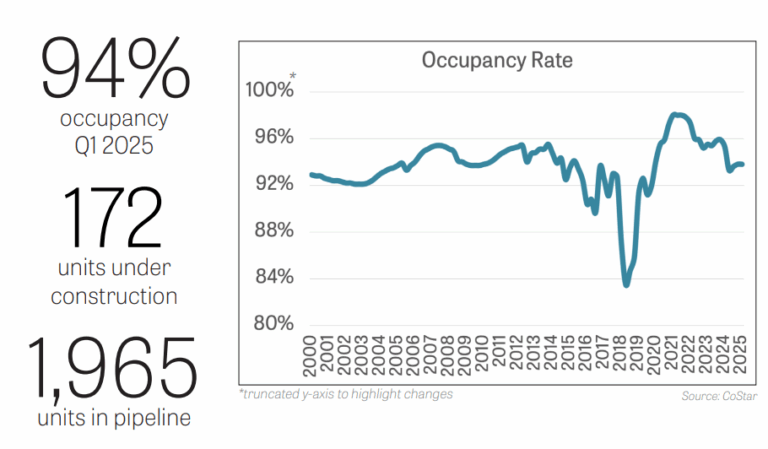
Source: DGRI – May Downtown Vitals Report May-DGRI-Vitals-Report.pdf
State Budget Remains Up in the Air

What’s happening: Michigan lawmakers have until July 1 to finalize the state budget. That deadline is in the state Constitution, but it’s self-imposed and comes with no real penalty.
Where things stand:
- Senate: Passed its $84.6B budget in May
- House: Passed a K-12 budget on June 11, but no full plan advanced
Speaker Matt Hall said he’s optimistic the K-12 budget can still get done by July 1, and possibly a roads deal too. But full drafts still need to be written and approved. Points of contention include:
School meals: The Senate includes $200M for free school meals. The House rolls that into general school funding—local districts would decide.
Private school funding: The House proposes $40M for private schools, raising constitutional questions.
Budget priorities: The House wants to shift $1.5B from K-12 to higher ed to make room for a future roads deal. The Senate wants school and road funding negotiated together.
Why it matters: Without a budget, schools and local governments that start their fiscal year on July 1 can’t finalize spending plans. That creates uncertainty for communities, public services, and businesses across Michigan.
What’s next:
- Lawmakers are expected to reconvene July 1
- The Governor has until October 1 to sign a final deal
- No budget means no new funding—schools and local governments are stuck waiting
Go deeper: Read more about the issue: Michigan lawmakers face budget deadline as school funding talks stall.
Data: Grand Rapids Crimes Against Persons
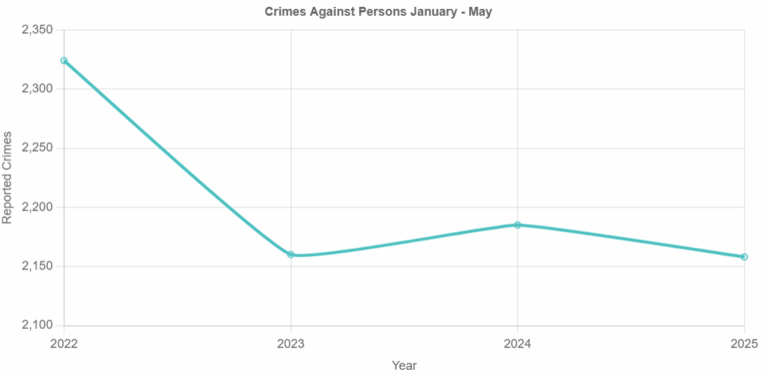
Source: GRPD Crime Stat Dashboard – Crimes Against Person – Dashboard
Why Housing Matters for Michigan's Future
Housing isn’t just a community issue — it’s a business one too.
Andy Johnston and Ryan Kilpatrick break down why housing access matters for talent, growth, and the future of our region. Watch the episode here or listen on Spotify.
Housing Gap Narrows in West Michigan
West Michigan continues to grow, and with it, the need for thoughtful housing planning across Kent County. According to the newly released Kent County Housing Needs Assessment, the region is seeing steady increases in both population and households, a trend that presents both opportunity and urgency as communities prepare for the future.
Big takeaway: The potential impact of adding housing options for middle income households and missing-middle typologies could support a vibrant community and economic mobility.
📈 Population Growth Snapshot
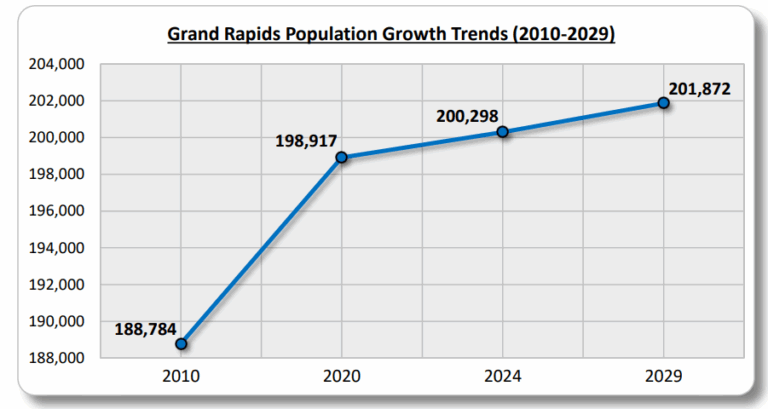
Overall, Kent County is facing a rental housing gap of 11,775 units and a for-sale housing gap of 22,139 by 2030 for a total of 33,914 units.
Both Grand Rapids and the remainder of Kent County saw a slight increase in housing needs for for-sale units and a slight decrease in housing needs for rental units which was influenced by the significant residential development added to the market.
The estimates indicate there is potential support for a variety of residential development alternatives in both the city of Grand Rapids and the balance of Kent County.
🏠 Household Growth and Housing Demand
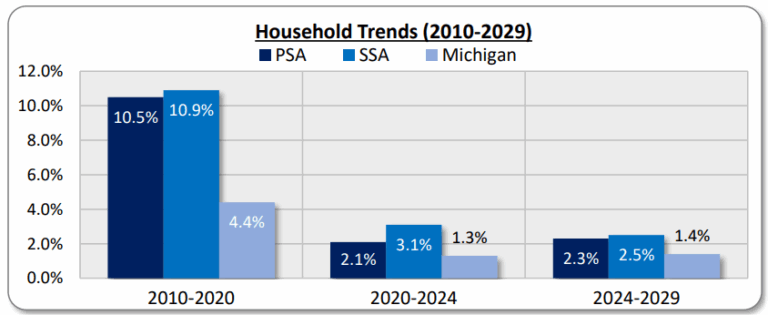
Household growth closely follows population trends. Between 2024 and 2029, Kent County is projected to add 6,371 new households, with nearly 30% of that growth in Grand Rapids and over 70% in the surrounding areas.
This demographic momentum reinforces the need and is driven by the good-paying jobs and the high quality-of-life that West Michigan is known for. This also means both rental and for-sale markets are expected to face pressure, and without strategic investment and planning, affordability challenges could intensify.
📥 Learn More & Stay Connected
To explore the full Kent County Housing Needs Assessment, view the report here.
Housing Next’s efforts to support local communities in prioritizing light touch density along and near key corridors, as well as our support to local communities interested in executing modest zoning reforms will be key to meeting our regional housing shortages. Housing Next is focused on catalyzing specific corridor redevelopment opportunities that can support existing businesses and further expand walkable, amenity-rich housing options. This includes:
Identifying opportunity rich areas that are already served by municipal infrastructure and where land is significantly underutilized.
Providing simple to use examples to improve local zoning for a variety of housing options to meet our regional needs.
Supporting local communities with technical assistance to modify policies and work in partnership with regional developers.
To stay informed about Housing Next’s work and how you can support housing solutions in West Michigan, sign up for our newsletter at www.housingnext.org. While you’re there, check out our toolkit & resource page—a valuable resource for communities, planners, and advocates working to address local housing needs.
Grand Rapids Chamber Backs Great Lakes Tunnel

What’s happening: The Grand Rapids Chamber voiced strong support for the Great Lakes Tunnel during a U.S. Army Corps of Engineers public hearing last week. The project would relocate Line 5 into a secure tunnel beneath the Straits of Mackinac.
Why it matters: It’s a win-win—protecting the Great Lakes while ensuring reliable, affordable energy for Michigan homes and businesses. Backed by 40,000+ hours of review, the project poses virtually zero spill risk.
Our take: This is a smart, strategic infrastructure investment. Let’s get it done.
Go deeper:
- Learn more about the issue
- Read the U.S. Army Corps of Engineers Draft Environmental Impact Statement
Leaders Gather for Congressional Roundtables
This month, the Grand Rapids Chamber hosted two roundtables with Michigan Congressmen Tim Walberg and John Moolenaar.
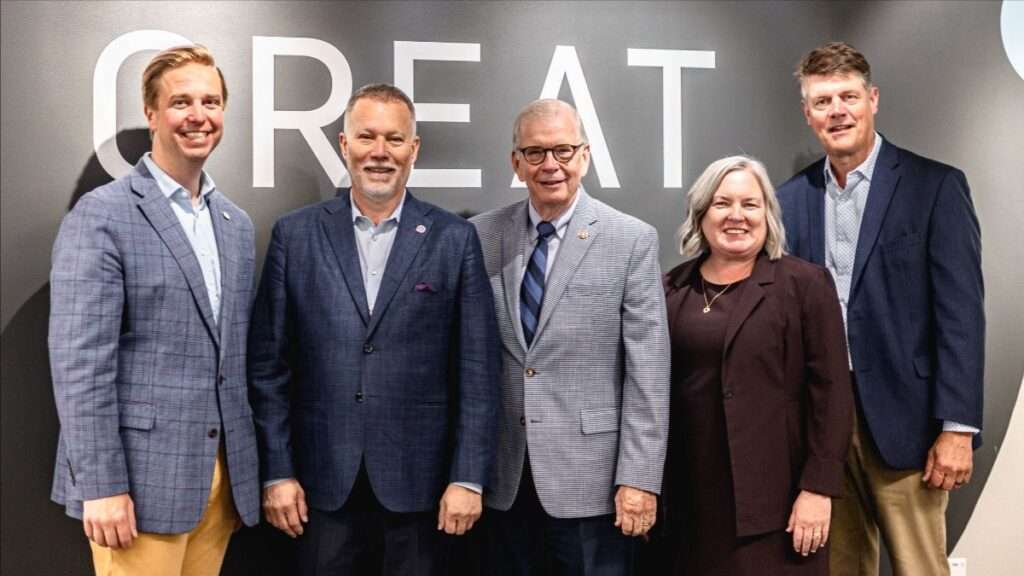
Congressman Walberg serves as Chair of the Education and Workforce Committee, as well as the Dean of the Michigan Congressional Delegation. The round table discussion centered on issues such as barriers to work visas, improving education and access to trade schools, and shortages in the workforce.

Congressman Moolenaar serves on the Committee on Appropriations, as well as the Select Committee on the Strategic Competition Between the United States and the Chinese Communist Party. The discussion with Congressman Moolenaar focused

Joshua Lunger
Vice President of Government Affairs
Grand Rapids Chamber