
How Improv Creates Great Leaders
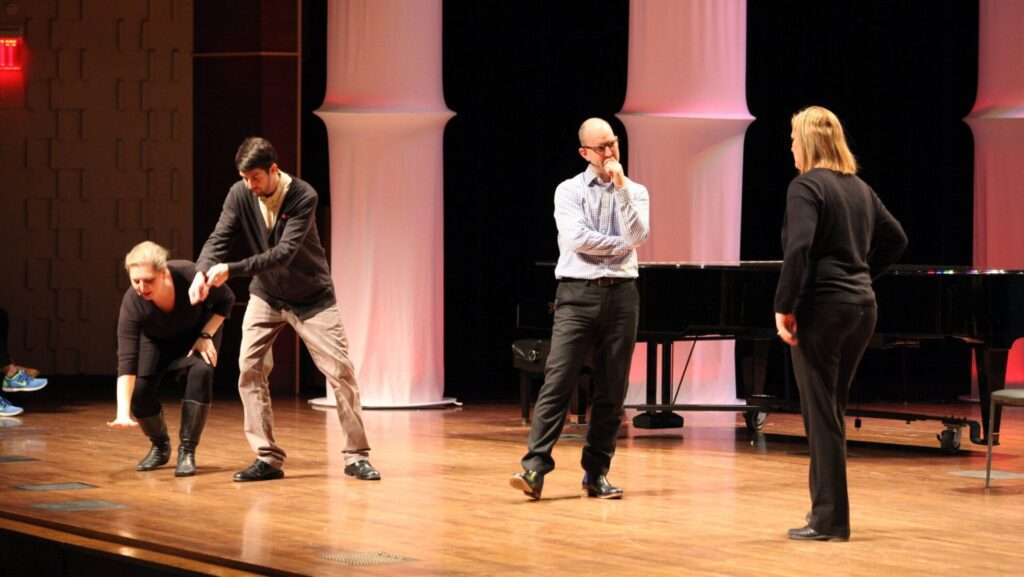
I’ve learned a lot from improv over the past 30 years, little did I know when I first tried out for improv as a student at Calvin University, it would change my life and teach me valuable leadership skills along the way.
Improv includes thinking and reacting quickly, but there is structure to successful improv through rules and the skills used. Improv is more than yelling random thoughts out for a laugh. And within the rules of the game, there’s spontaneity, and in that spontaneity, the opportunity for leadership to flourish. Here is what those have taught me:
Yes, and . . .
Most people have heard of this number one rule of improv. Great leaders build on ideas, not shut them down. When someone offers a thought, “Yes, and…” keeps the momentum up. It doesn’t mean we operationalize all ideas but it does say: I hear you. Let’s explore it. Teams thrive when their ideas aren’t dismissed but expanded. “Yes, and” creates energy. “No, but” kills it.
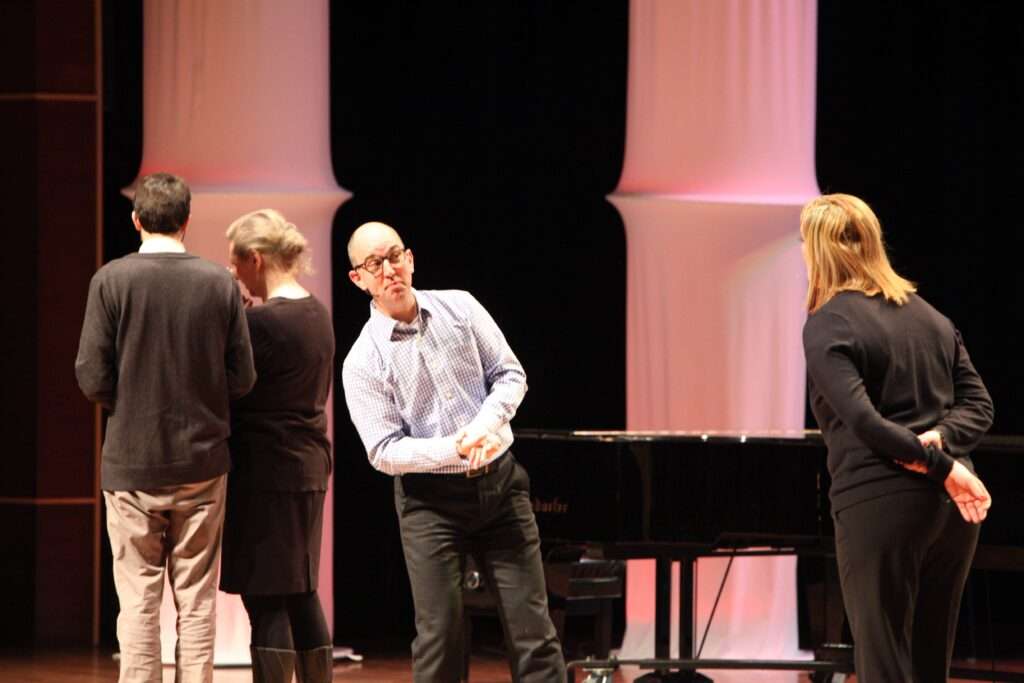
Make Others Look Good
Want to be a great performer? Make your scene partner shine. Want to be a great leader? The same rule applies, make your team members look good. Leadership isn’t about spotlighting yourself. It’s lifting others up, celebrating their wins, being there for them when they fail. If your team looks good, you’ve done your job.
Listening Matters
If you don’t listen well in improv, the scene crumbles. I was reminded again this week that we have two ears and one mouth for a reason. To listen well we have to be fully present. No electronics, no distractions, no thinking about your response. Just absorb what is being said. Listening is love and a super power. The more you listen, the more you understand. And the better your decisions will be.
It's Okay to Fail
In improv, not all our scenes go well. Sometimes I can’t think of something to say. But when you have team members who are there to make you look good, they will be there to help pick you up. And when we fail, guess what, we don’t die. We learn. Leaders can make mistakes. I’m reminded of Nelson Mandela’s quote: “I never lose, I either win or learn.”
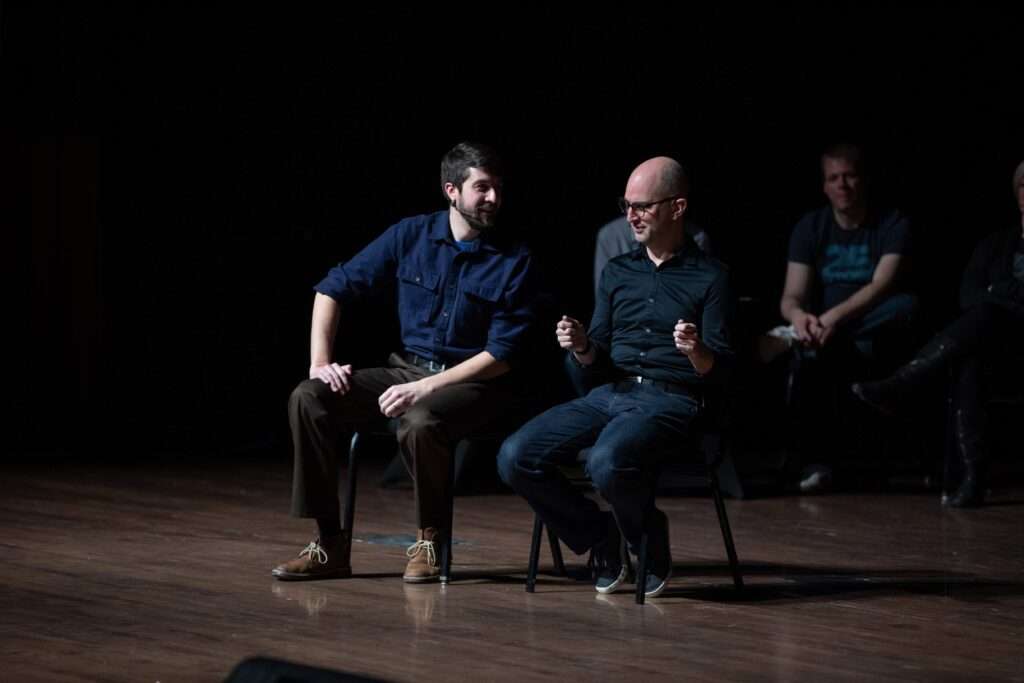
Give Gifts
When improvising, a “gift” is anything you offer your scene partner — an idea, a character, a setting. If you know your scene partner well, you can give better gifts that make them look good. For those in leadership, giving gifts can look like giving credit for success, creating space to contribute, asking how you can help and encouraging someone when they need it. The best leaders don’t grab the mic — they hand it to others.
Improv has taught me a lot over the years. We all improvise every day. Even our structured days have room for spontaneity! I want to encourage you to think about how you can use some of the skills in your daily life; be open to ideas, listen well, make an effort to make others look good, give gifts, and don’t be afraid to fail.
Rick Treur co-founded and still performers regularly with River City Improv
Register for a Chamber Leadership Program and the Create Great Leaders Annual Party!

Rick Treur
Director of Talent & Leadership
Grand Rapids Chamber
Climate Plan Needs Focus, Not Overreach

On August 12, the Grand Rapids Commission will reconvene and decide on their next steps for the Climate Action & Adaptation Plan (CAAP).
Our take: A majority of the plan is not a concern, and we align with a number of recommendations (particularly around active parks, land use and certain pro-housing items), but there a number of areas of areas where we still have strong concerns:
- The plan is too big and too vague. The plan outlines 197 actions, 71 programs, 84 processes and 38 policy changes. Many of them are unclear, unrealistic, and resource-heavy to implement.
- It will create regulation overload. The plan pushes mandated energy reporting, audits, and retrofitting. It seeks to set new local building standards that are more burdensome than state code, creating confusion, risk, and costs for businesses. (Strategy 3, Action 1 / Buildings and Industry)
- It creates new costs for businesses. An energy Benchmarking & Transparency Ordinance adds reporting burdens and potential penalties, which will be especially difficult for small businesses. (Strategy 2, Action 1 / Buildings & Industry)
- It will deter development. Construction costs will be raised by advocating for stronger building codes and design mandates, making redevelopment harder. (Strategy 3, Actions 1 & 4 / Buildings & Industry)
- It has mixed messages on housing – making it more expensive. While supporting positive density and land-use items, it also proposes:
- Adopting the most stringent energy codes (they are even tied up in lawsuits for excessive cost)
- New cost-prohibitive mandates like EV charging, solar, and electrification
- More greenspace requirements = less buildable land
(Strategy 1, Actions 3, 5 & 6 / Residential Homes, Strategy 1, Action 5 / Buildings & Industry, Strategy 3, Action 2 / Nature-Based Solutions)
- It promotes new taxes. The plan calls for taxes to fund home upgrades and e-bike programs. (Strategy 3, Action 3 / Residential + Transportation)
- It picks business winners and losers. Certain business models (like cooperatives) are labeled as “equitable,” implying others are not. That’s a slippery slope. (Strategy 1, Action 7 / Food Systems)
- It will create more patchwork rules. Food waste bans and plastic bag restrictions are proposed, policies that would add costs for restaurants and grocers. (Strategy 2, Actions 6 & 11 / Food Systems)
The Bottom Line
The City of Grand Rapids shouldn’t go a mile wide and an inch deep. It is a recipe for overpromising and underdelivering.
Instead, we recommend setting specific actions and programs that are SMART (specific, measurable, actionable, realistic and time-bound) and have a broader community consensus particularly when the City is already facing growing budget deficit projections.
- Recommendations for alignment & action: There are certainly elements of the 197 actions that the City is already doing, that will have a meaningful impact and should be enhanced. This includes actions like providing high-quality parks and community spaces, and increasing streetscaping and tree plantings (particularly in neighborhoods of focus).
- The best thing the City of Grand Rapids can do to reduce emissions is to invest in vibrant neighborhoods and business districts that are walkable, safe, and rich in amenities because these communities naturally support lower-emission lifestyles.
WHY INVEST IN VIBRANT NEIGHBORHOODS?
Vibrant Neighborhoods Support Housing Affordability
- Compact, mixed-use development allows for more housing near jobs and transit, reducing the sprawl that drives emissions.
- Affordable housing near amenities helps families avoid having to move to far-flung areas where driving is the only option.
- Promoting mixed-income neighborhoods increases economic mobility and opportunity.
- Fewer car trips = fewer emissions. If residents can walk or bike to work, school, shops, and services, they rely less on vehicles, which are a major source of greenhouse gas emissions.
- Well-lit streets, safe intersections, and community policing make people more likely to walk, bike, or take public transit instead of drive.
Amenities Encourage Local Living
- When neighborhoods include grocery stores, parks, childcare, and retail, people spend more of their time and money locally. This keeps economic activity close to home, supports neighborhood small businesses and reduces “emissions leakage” to other areas.
- Trees, parks, and green space absorb carbon, cool neighborhoods, and improve air quality—while also encouraging outdoor activity.
Building thriving neighborhoods creates places where people can live, work, and play in our city. This reduces transportation emissions, supports housing affordability, enhances economic mobility, and creates healthier, more resilient communities.
We are all striving for a community where families and businesses can grow together – it is important that we focus on the things that we must do well, and not try to do everything at once.
WHY IT MATTERS
This plan and its recommendations come at a time when commercial offices and the restaurant/retail industry are struggling. Any new requirements are just one more extraneous item that places an additional burden on some of our community’s favorite gathering places or stops the construction of our next favorite spot.
These new programs and requirements would only pertain to Grand Rapids and would further drive up the cost of being in the urban core and could throw up new barriers to redevelopment and future investment.
HOW TO ENGAGE
Read the plan! Your voice matters— email or call the Commissioners (info here) or speak at the July 29 meeting at 7:00 PM to give public comment. Multiple Commissioners mentioned not hearing enough from the community on this plan, so every contact counts. Information on the plans follows below!
- Being brief is ok!
- Be polite and share your knowledge – you are an expert explaining concerns based on your experience.
If you have any questions, contact Trevor at trevor@grandrapids.org

Joshua Lunger
Vice President of Government Affairs
Grand Rapids Chamber
City Weighs Climate Plan

Last Tuesday, a divided City Commission had a tense discussion on prioritizing 20 actions from the Climate Action & Adaptation Plan (CAAP) and next steps for adoption.
Ultimately, there appears to be support for adopting the entire plan, and the Commission will decide the actual agenda item for the August 12 meeting when they reconvene on July 29.
Our take: This is very concerning for businesses. The plan includes 197 actions that staff would begin to operationalize, and there is very little clarity on what implementation could look like. We have heard significant concerns over several pieces within the plan that could lead to burdensome new mandates, unachievable targets, and conflicting priorities that could drive up the cost of housing, construction and development.
Several items in the Business and Industry Chapter (see below) recommend that the city:
- Evaluate an Energy Benchmarking and Transparency Ordinance (mandated annual reporting of energy data and a public scorecard)
- Audit requirements
- Create building performance standards
- Implement retro commissioning requirements
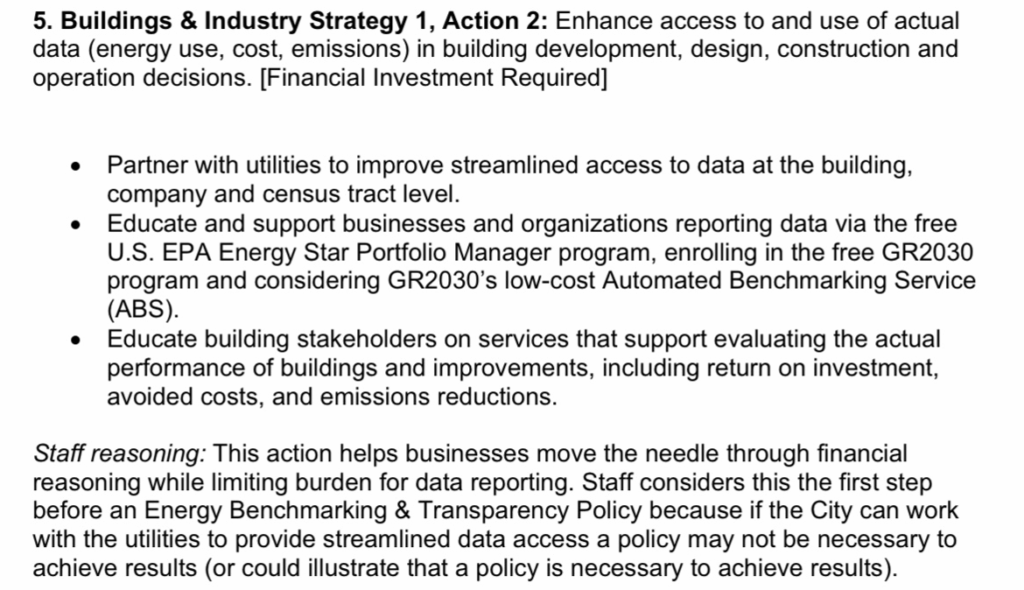
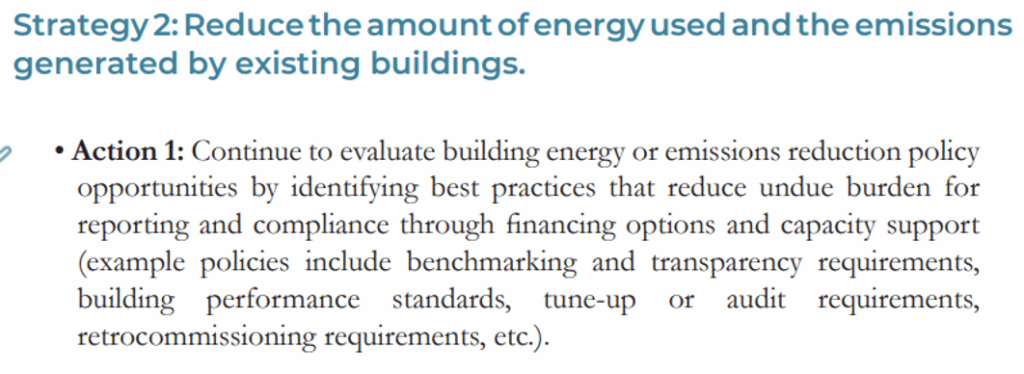
If the plan is adopted – these items are not immediately in effect – it is giving direction to explore implementation and operationalization. It will, however, create immediate uncertainty and act as a barrier to investment.
Additional Concerns:
- Costly and Compulsory: The recommendations include 71 programs, 84 processes, 38 policy changes and 4 new pilots. It also has 11 compulsory recommendations to be required by law and 41 services.
- Conflicting Priorities on Housing: The plan states support for access to affordable housing, but then sets a goal of electrifying all new residential buildings and 11% of existing buildings per year. It also prioritizes encouraging adopting the most stringent energy codes.
- Electrification (particularly for existing housing) is incredibly expensive and the energy code is being challenged by Michigan Home Builders because it will add tens of thousands of dollars to projects with a very long payoff period.
- Disproportionate Impact: New buildings, large/sophisticated employers, as well as areas that have seen major investment, will navigate and have much less impact from the recommendations. Areas that have seen a lack of investments and with older infrastructure would bear a disproportionate impact if the items related to industry are advanced.
- Exploring New Taxes: The plan also includes language encouraging the evaluation of new taxes and other funding mechanisms for residential home energy updates and bicycle/e-bike programs.
Why it Matters: This plan and its recommendations come at a time when commercial offices and the restaurant/retail industry are struggling. Any new requirements are just one more extraneous item that places an additional burden on some of our community’s favorite gathering places.
These new programs and requirements would only pertain to Grand Rapids and would further drive up the cost of being in the urban core and could throw up new barriers to redevelopment and future investment. If we want our City to continue to be competitive and see growth, this plan is a clear step in the wrong direction.
HOW TO ENGAGE
Your voice matters— email or call the Commissioners (info here) or speak at the July 29 meeting at 7:00 PM at the Gerald R. Ford Academic Center to give public comment. Multiple Commissioner mentioned not hearing enough from the community on this plan, so every contact counts. Information on the plans follows below!
- Being brief is ok!
- Be polite and share your knowledge – you are an expert explaining concerns based on your experience.
What Happens Next:
- July 29: Commission will discuss and set the agenda item for August 12.
- August 12: Expected vote to adopt the full CAAP
Learn More
- Watch the recording of staff presentation
- Read the full report
- Find additional CAAP materials from the Office of Sustainability
If you have any questions, contact Trevor Blood at trevor@grandrapids.org.

Trevor Blood
Local Government Affairs Coordinator
Grand Rapids Chamber
The Kiss Cam Crisis—and What It Means for Your Business

For several days now, one story has dominated the headlines: a billion-dollar tech company, its CEO and Chief People Officer, and an unexpected moment on a stadium “kiss cam” that went viral. Within hours, the video was everywhere. Soon after, leadership changes were underway, and the company issued statements about a situation they never imagined.
It’s easy to dismiss this as, in the original poster’s words, “Play stupid games, win stupid prizes.”
But for business owners and leaders, this isn’t about scandal. It’s about how quickly individual decisions can impact an entire organization and everyone who works there.
Behind the headlines are employees wondering if their jobs are secure, clients questioning stability, and a brand whose credibility took a hit overnight.
This isn’t just a problem for big companies. It’s an everyday business vulnerability. And for organizations of any size, the real lesson runs deeper: personal behaviors can instantly create organizational risk.
Most large companies have crisis communication teams and legal counsel. Smaller organizations rarely do. That makes preparation the single best defense when—not if—the unexpected happens. Prepared teams protect brands. Train and plan now so you can lead clearly later.
Quick-Action Checklist: When Personal Behavior Becomes a Brand Risk
- Pause before you post. Avoid public statements unless legally or operationally required. A hold statement will usually suffice.
- Call in experts. Bring in outside PR and HR advisors immediately for objectivity and clear-headed navigation.
- Align leadership. Internal talking points should be short, clear, and consistent.
- Go quiet externally. Silence is often the best strategy to avoid fueling the story. Instead of playing firefighter, focus on your key stakeholders and core mission.
- Protect trust. Reassign roles or shift leadership if client confidence is at risk.
- Follow policy. Handle any violations through HR channels with fairness and transparency.
Why It Matters for Every Business
You can’t control people. But you can control processes and policies that minimize risk and provide stability in times of uncertainty. Clear crisis protocols, media training, and consistent communication practices aren’t just for large organizations—they’re essential for everyone.
Preparedness isn’t about fear. It’s about confidence. When your team knows what to do in a high-stakes moment, you protect your reputation, your clients, and your future.
Speak Up, Cash Out: A School-Based Initiative of Silent Observer West Michigan


Silent Observer of West Michigan is a nonprofit organization dedicated to promoting public safety by empowering individuals to anonymously share information that helps law enforcement solve and prevent crime. Since 1972, Silent Observer has bridged the gap between citizens and law enforcement through its confidential tip system, which is accessible via phone, online, or mobile app.
In the year ahead, Silent Observer is amplifying its focus on youth safety through its school-based initiative, “Speak Up, Cash Out.”
This program encourages students to anonymously report threats, weapons, drug activity, fights, or any behaviors that jeopardize the safety of the school environment. Silent Observer works directly with school officials and security resource officers to investigate credible tips, and when a report leads to intervention, disciplinary action, or criminal charges, the student tipster may receive a cash reward ranging from $100 to $1,000.

With youth violence, school-related incidents, and juvenile homicides rising in West Michigan, Speak Up, Cash Out plays a critical role in prevention and early intervention. The program ensures student anonymity while empowering them to take an active role in school safety.
As program manager of Silent Observer, I believe in the potential of this initiative to give students a voice and reward them for their courage. So often, students feel powerless about the situations around them, but Speak Up Cash Out provides a safe space for all to protect their own safety and the safety of their peers. Every student deserves to feel safe at school—and arrive home safely each day.
As an organization, we are committed to making that vision a reality through this work as we continue our pursuit to promote public safety and crime prevention in Kent and Ionia counties.
Tips can be submitted anytime by mobile app, online at www.silentobserver.org or by calling the tip hotline at 616.774.2345.

Hayley Strickland
Program Manager
Silent Observer
Championing Business Growth

The Grand Rapids Chamber’s Economic Growth team exists to help businesses overcome challenges and scale with confidence, especially those traditionally underrepresented in the business community.
Through programs like Elevate, the Chamber’s Minority Business Accelerator, entrepreneurs receive targeted education and one-on-one mentorship to build a strong foundation for growth.
“Elevate has been key,” says Laura Hopson, President and CEO of EM Services. “It’s not just the mentorship it’s access to relationships, resources, awareness, and knowledge that make the difference.”
Entrepreneurs like Aldo Colorado, Owner of Do It All Painting LLC, echo that sentiment. “Networking has been really important for our business,” he says. “As a minority business owner, we often lack resources but the Chamber helps make those connections.”
For Aldo, the Chamber has been a connector. “We’ve seen different businesses grow in our community, and that’s greatly because of the resources the Chamber has provided,” he says. “Networking has been a great help getting our name out there and making those connections.”
Vanessa Shmanske, Owner of Sweet Details GR, who launched a business as a newcomer to the U.S., reflects on the support she received, “I didn’t know the culture, the laws, or the market. The Chamber provided more than resources, they gave me connections and a safe space where I felt understood.”
Whether it’s technical assistance, advocacy, or simply someone who believes in your business, the Economic Growth team is helping entrepreneurs thrive and build a stronger, more inclusive West Michigan.

Jess Jones
Director of Marketing & Events
Grand Rapids Chamber
Witte Travel & Tours Celebrates 50 Years of Exceptional Travel
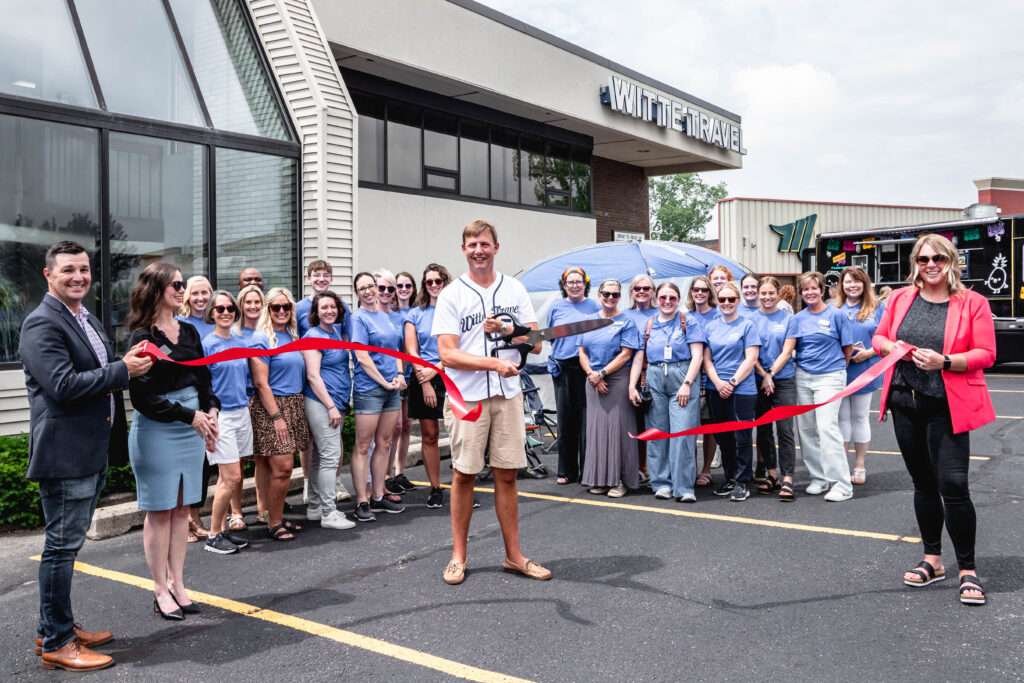
Witte Travel & Tours marked 50 years with a ribbon-cutting ceremony in partnership with the Grand Rapids Chamber and a client appreciation celebration.
Founded in 1975 by Henk Witte and deeply rooted in the West Michigan community, Witte is a leader in Group Travel and Vacation Planning.
Where It All Began
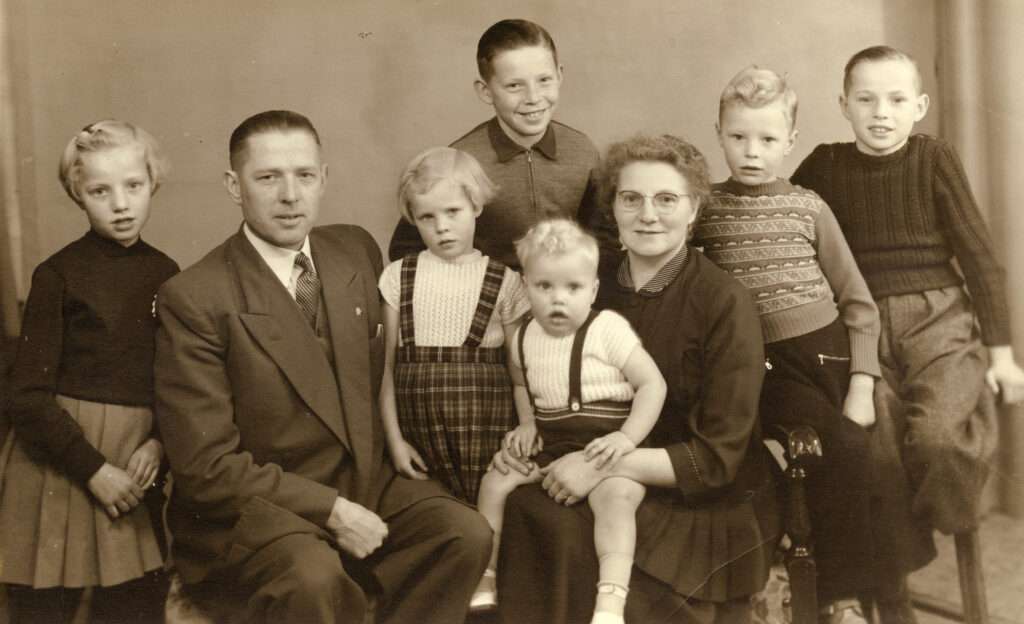
Facing an uncertain future in the postwar Netherlands, the Witte family immigrated to Grand Rapids in the 1950’s. Young entrepreneurs, Henk and his brother Herm published an ad in The Grand Rapids Press, “Two Dutch boys looking for yard work” and Witte Lawn Maintenance continues to this day under Herm’s leadership.
Witte Travel began in a basement in Ada – springing from the family’s experience with the Dutch Immigration Society arranging charter flights to the Netherlands, Henk’s knack for arranging choir tours for friends, and experience with KLM airlines.

Travel Made Exceptional
Today Witte is sought out nationally, and internationally for our Group Travel and Vacation planning services. Our client list includes individuals, families, businesses, middle & high schools, colleges, universities, and churches.
Europe remains our most popular destination for groups with Africa, South & Central America, Asia, Australia, New Zealand, and the South Pacific growing more popular. Our Vacation team remains focused on Europe, with deep expertise in Disney, cruises, the Caribbean, Mexico, destination weddings and honeymoons.
Returning customers and their kind referrals continue to fortify our business. Witte Travel & Tours is proud to continue Henk Witte’s legacy combining a passion for travel and building strong relationships. As we celebrate our first 50 years, we extend our gratitude to our clients, community, and team members.
As we look ahead, one thing is certain: the adventure has only just begun.
“Fifty years, and we’re just getting started.” — Nate Barendse
Government Affairs: Q2 Quarterly Update

Ballot Proposals Advance as Petitions
What happened: The Michigan Board of Canvassers approved ballot language for several proposals on Friday, including:
- A referendum to eliminate the tipped wage credit by repealing the bipartisan tipped/minimum wage legislation passed in February.
- A constitutional amendment that would add a 5% income tax on small businesses and individuals earning over $500,000/couples over $1 million, raising the total rate to 9.25%.
The Grand Rapids Chamber, joined by business groups including the Michigan and Detroit Chambers, West Michigan Policy Forum, SBAM, and MMA, held a press conference expressing alarm at these measures.
What’s next: The supporters will now begin gathering signatures:
- Constitutional amendment (income tax): 445,722 valid signatures (10% of the last gubernatorial vote) by 120 days before the election.
- Referendum (tipped wage): Half that number, with the same deadline. If a sufficient number of signatures are submitted, the current law on tipped wages is paused.
Why it matters: If passed, the tax amendment would give Michigan the Midwest’s highest income tax rate and the 7th highest in the U.S., disproportionately impacting small and mid-sized pass-through entities (LLCs, S-Corps, etc).
Repealing the bipartisan tipped wage law would begin phasing out the tipped wage credit, which the industry shift expects to:
- Increase prices
- Trigger layoffs and automation
- Exacerbate challenges in a sector already hit by inflation and changing consumer habits
These proposals risk economic instability and threaten local jobs (as shown in Washington, D.C.). The Chamber remains committed to our members who will face significant uncertainty as these proposals advance.
Data: Downtown Housing Occupancy
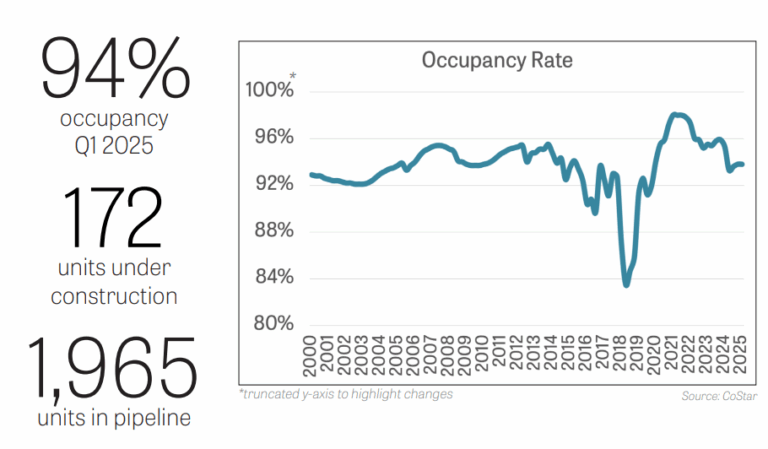
Source: DGRI – May Downtown Vitals Report May-DGRI-Vitals-Report.pdf
State Budget Remains Up in the Air

What’s happening: Michigan lawmakers have until July 1 to finalize the state budget. That deadline is in the state Constitution, but it’s self-imposed and comes with no real penalty.
Where things stand:
- Senate: Passed its $84.6B budget in May
- House: Passed a K-12 budget on June 11, but no full plan advanced
Speaker Matt Hall said he’s optimistic the K-12 budget can still get done by July 1, and possibly a roads deal too. But full drafts still need to be written and approved. Points of contention include:
School meals: The Senate includes $200M for free school meals. The House rolls that into general school funding—local districts would decide.
Private school funding: The House proposes $40M for private schools, raising constitutional questions.
Budget priorities: The House wants to shift $1.5B from K-12 to higher ed to make room for a future roads deal. The Senate wants school and road funding negotiated together.
Why it matters: Without a budget, schools and local governments that start their fiscal year on July 1 can’t finalize spending plans. That creates uncertainty for communities, public services, and businesses across Michigan.
What’s next:
- Lawmakers are expected to reconvene July 1
- The Governor has until October 1 to sign a final deal
- No budget means no new funding—schools and local governments are stuck waiting
Go deeper: Read more about the issue: Michigan lawmakers face budget deadline as school funding talks stall.
Data: Grand Rapids Crimes Against Persons
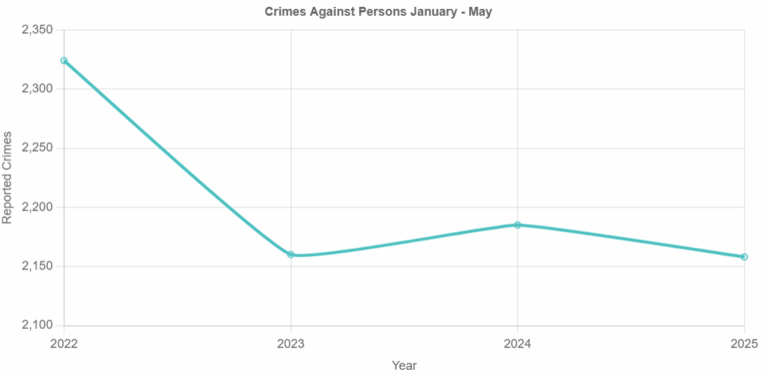
Source: GRPD Crime Stat Dashboard – Crimes Against Person – Dashboard
Why Housing Matters for Michigan's Future
Housing isn’t just a community issue — it’s a business one too.
Andy Johnston and Ryan Kilpatrick break down why housing access matters for talent, growth, and the future of our region. Watch the episode here or listen on Spotify.
Housing Gap Narrows in West Michigan
West Michigan continues to grow, and with it, the need for thoughtful housing planning across Kent County. According to the newly released Kent County Housing Needs Assessment, the region is seeing steady increases in both population and households, a trend that presents both opportunity and urgency as communities prepare for the future.
Big takeaway: The potential impact of adding housing options for middle income households and missing-middle typologies could support a vibrant community and economic mobility.
📈 Population Growth Snapshot
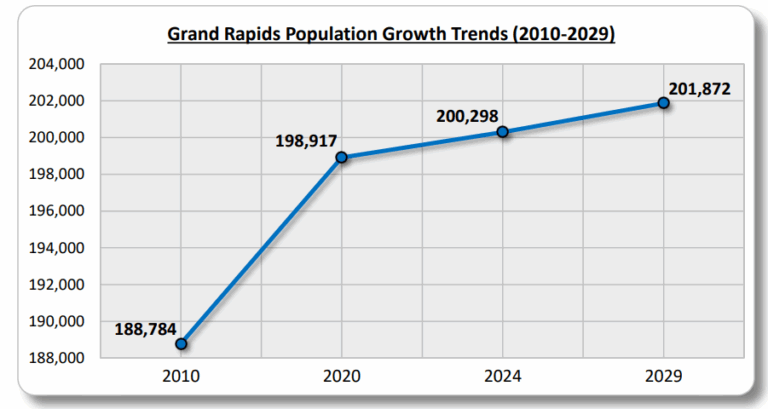
Overall, Kent County is facing a rental housing gap of 11,775 units and a for-sale housing gap of 22,139 by 2030 for a total of 33,914 units.
Both Grand Rapids and the remainder of Kent County saw a slight increase in housing needs for for-sale units and a slight decrease in housing needs for rental units which was influenced by the significant residential development added to the market.
The estimates indicate there is potential support for a variety of residential development alternatives in both the city of Grand Rapids and the balance of Kent County.
🏠 Household Growth and Housing Demand
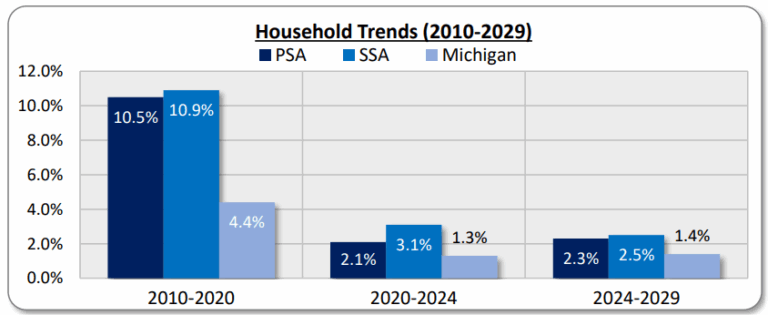
Household growth closely follows population trends. Between 2024 and 2029, Kent County is projected to add 6,371 new households, with nearly 30% of that growth in Grand Rapids and over 70% in the surrounding areas.
This demographic momentum reinforces the need and is driven by the good-paying jobs and the high quality-of-life that West Michigan is known for. This also means both rental and for-sale markets are expected to face pressure, and without strategic investment and planning, affordability challenges could intensify.
📥 Learn More & Stay Connected
To explore the full Kent County Housing Needs Assessment, view the report here.
Housing Next’s efforts to support local communities in prioritizing light touch density along and near key corridors, as well as our support to local communities interested in executing modest zoning reforms will be key to meeting our regional housing shortages. Housing Next is focused on catalyzing specific corridor redevelopment opportunities that can support existing businesses and further expand walkable, amenity-rich housing options. This includes:
Identifying opportunity rich areas that are already served by municipal infrastructure and where land is significantly underutilized.
Providing simple to use examples to improve local zoning for a variety of housing options to meet our regional needs.
Supporting local communities with technical assistance to modify policies and work in partnership with regional developers.
To stay informed about Housing Next’s work and how you can support housing solutions in West Michigan, sign up for our newsletter at www.housingnext.org. While you’re there, check out our toolkit & resource page—a valuable resource for communities, planners, and advocates working to address local housing needs.
Grand Rapids Chamber Backs Great Lakes Tunnel

What’s happening: The Grand Rapids Chamber voiced strong support for the Great Lakes Tunnel during a U.S. Army Corps of Engineers public hearing last week. The project would relocate Line 5 into a secure tunnel beneath the Straits of Mackinac.
Why it matters: It’s a win-win—protecting the Great Lakes while ensuring reliable, affordable energy for Michigan homes and businesses. Backed by 40,000+ hours of review, the project poses virtually zero spill risk.
Our take: This is a smart, strategic infrastructure investment. Let’s get it done.
Go deeper:
- Learn more about the issue
- Read the U.S. Army Corps of Engineers Draft Environmental Impact Statement
Leaders Gather for Congressional Roundtables
This month, the Grand Rapids Chamber hosted two roundtables with Michigan Congressmen Tim Walberg and John Moolenaar.
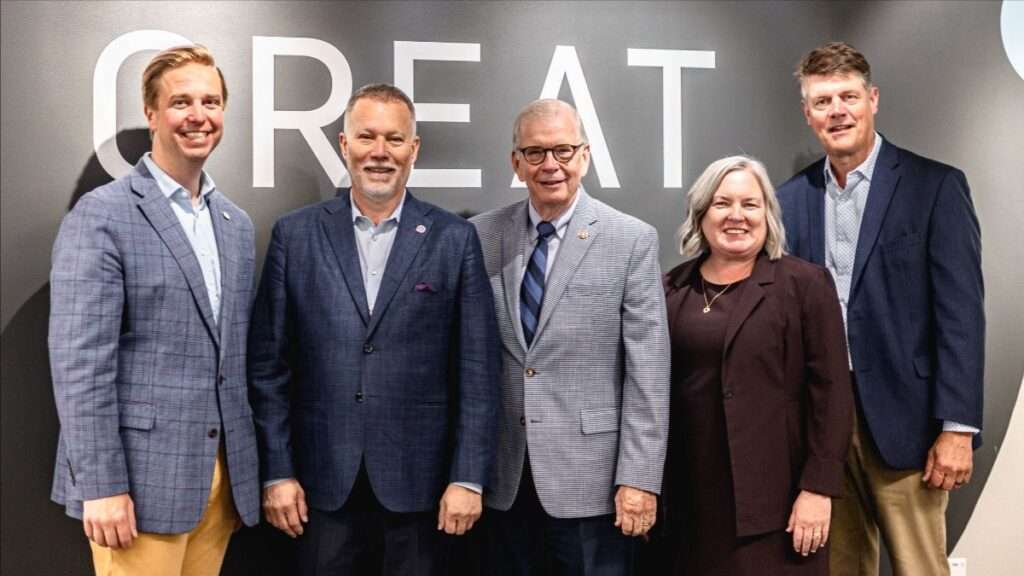
Congressman Walberg serves as Chair of the Education and Workforce Committee, as well as the Dean of the Michigan Congressional Delegation. The round table discussion centered on issues such as barriers to work visas, improving education and access to trade schools, and shortages in the workforce.
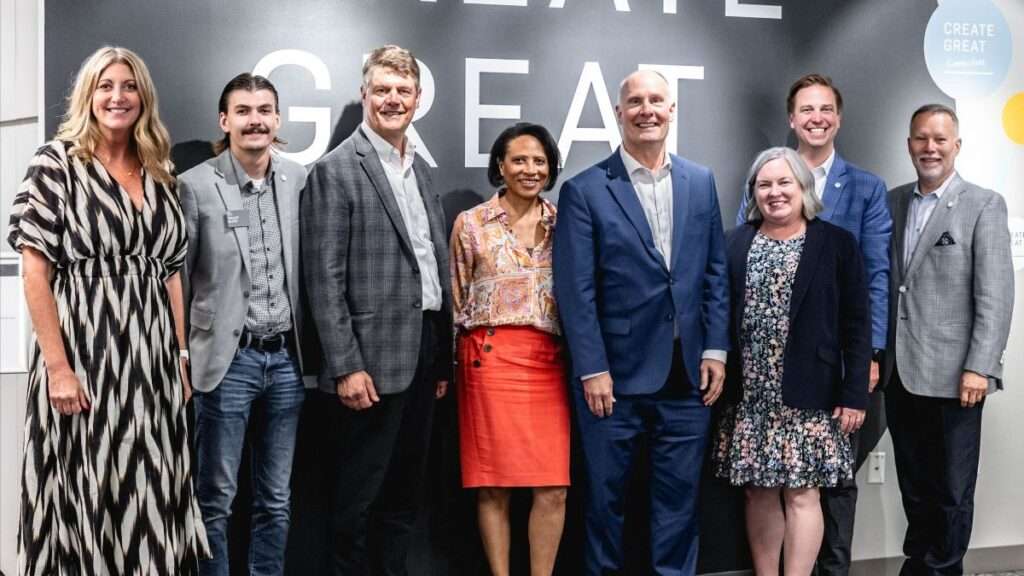
Congressman Moolenaar serves on the Committee on Appropriations, as well as the Select Committee on the Strategic Competition Between the United States and the Chinese Communist Party. The discussion with Congressman Moolenaar focused
Joshua Lunger
Vice President of Government Affairs
Grand Rapids Chamber
Rooted In Heritage

Interview by:
Omar Cuevas, Grand Rapids Chamber
Interviewee:
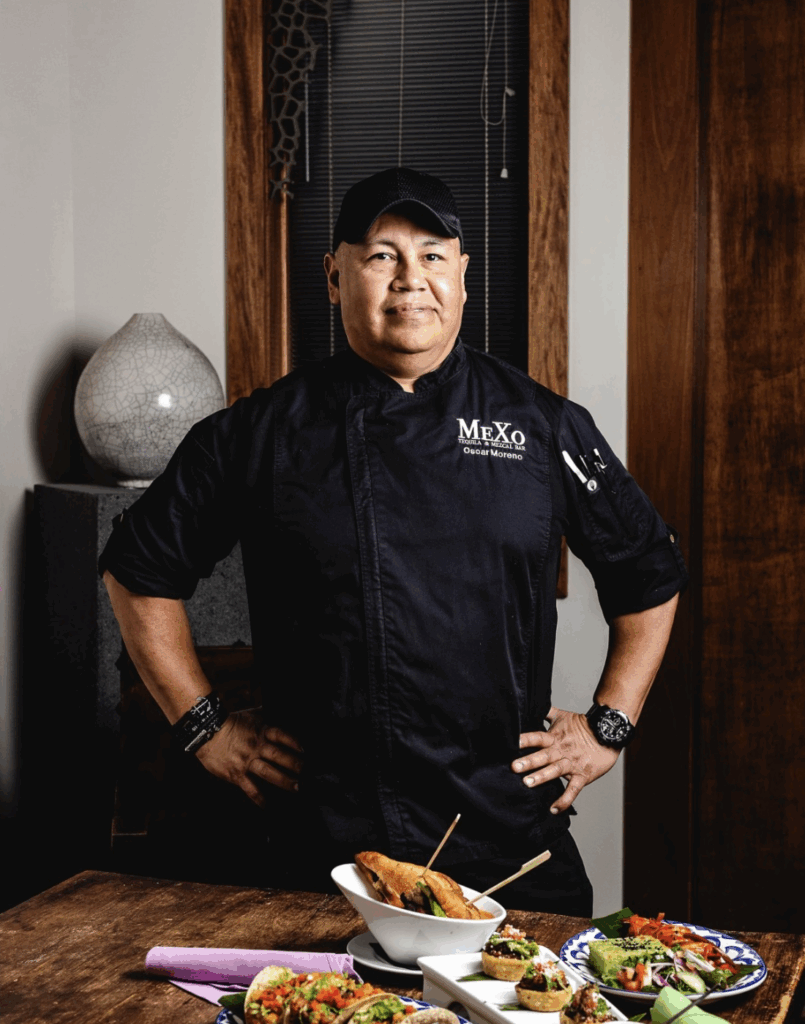
Chef Oscar Moreno, MeXo
What inspired your focus on pre-Hispanic traditions, and how has that shaped MeXo’s identity?
My inspiration came from a deep desire to reconnect with the roots of Mexican cuisine—before colonization, before European influence. Pre-Hispanic food is a powerful expression of identity, history, and the relationship between people and the land. When I began exploring these traditions, I realized how much had been forgotten or overlooked. MeXo was born from that realization. It’s not just a restaurant; it’s a platform to tell stories through food, to revive native ingredients, ancestral techniques, and spiritual meaning behind each dish. This vision has shaped every aspect of MeXo’s identity—from the ingredients we source to the way we present each course. It’s about honoring the past while creating something vibrant and relevant for today.

How do visual art and culinary expression come together in the MeXo dining experience?
At MeXo, the relationship between visual art and culinary expression is inseparable. I see every plate as a canvas and every ingredient as a color or texture that tells a story—often one rooted in our pre-Hispanic heritage. Just like a painting evokes emotion, That’s why do collaboration with local artists, Arturo Morales and others . We I want the dishes to awaken memory, curiosity, and connection. The ambiance, the colors, the handmade plates, and even the way light hits the food—all of it works together to immerse guests in a complete sensory journey. It’s not just about feeding people; it’s about making them feel something deeper through beauty, culture, and flavor.

Being named 'Restaurant of the Year' is a significant achievement. What new projects or culinary innovations are you excited to bring to MeXo and the Grand Rapids food scene?
Being named Restaurant of the Year is an incredible honor, and it fuels our commitment to continue pushing boundaries. At MeXo, we’re diving even deeper into the roots of pre-Hispanic Mexican cuisine—exploring lesser-known ingredients, traditional preservation methods, and ceremonial dishes that tell a story on every plate. One project I’m especially excited about is a seasonal tasting series called Sabores Ancestrales, where we’ll spotlight indigenous ingredients like amaranth, white cacao, or pulque in modern formats. We’re also working on educational collaborations to bring more awareness to the cultural history behind the food. Beyond MeXo, I’m passionate about mentoring young chefs in Grand Rapids who want to explore their heritage through food. There’s so much richness in our collective culinary identity, and I see this as just the beginning.

Omar Cuevas
Senior Vice President of Investor Relations
Grand Rapids Chamber
Invested In Impact: Why Leading Partners Are Building More Than Business
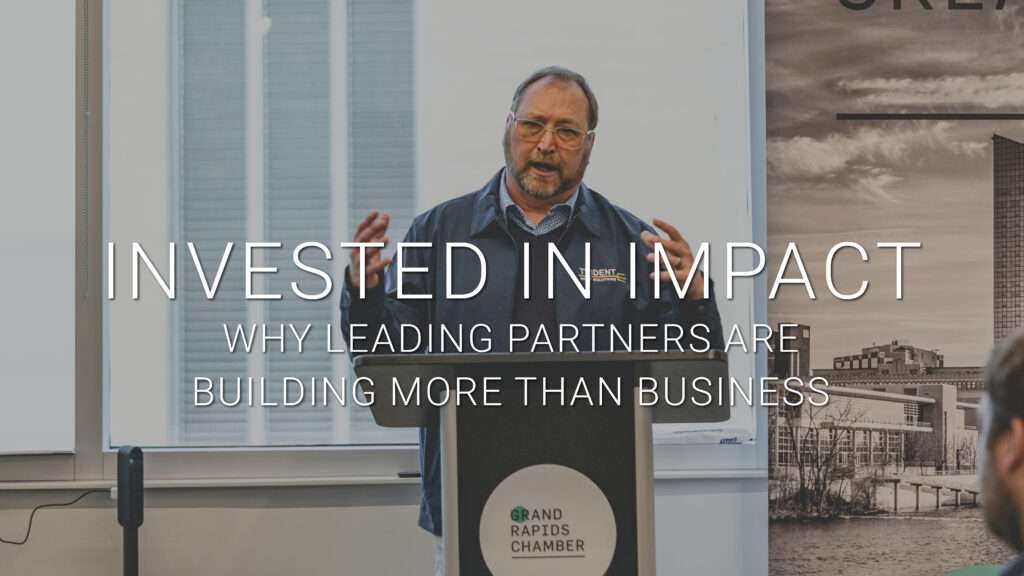
In West Michigan’s fast-growing business landscape, standing still isn’t an option. That’s why the Grand Rapids Chamber’s Leading Partners are doing more than keeping up—they’re helping set the pace.
From startups to century-old institutions, these organizations may span industries, but they share a common goal: making meaningful contributions to both their business and their community.
What sets a Leading Partner apart is intention. These are companies choosing to amplify their voices in shaping the region’s economic future. They invest not only in the Chamber, but in a stronger, more inclusive West Michigan. They’re building deep relationships, accessing powerful resources, and using their platforms to be seen—and heard— as thought leaders and community champions.
This investment fuels action.
The Chamber’s work advocating for pro-business policies, from city hall to Washington DC, happens because of these partnerships. So does our commitment to equity, like the 100 in 100 initiative, which creates permanent housing solutions for people experiencing chronic homelessness.
Through work of the Economic Growth team, Leading Partner support helps deliver guidance and technical assistance to microenterprises and small businesses. And inside the Chamber’s collaborative workspace, businesses are forming new connections and learning together through programs like the roundtables and business-focused workshops.
At the heart of it all? A shared belief that business success and community success go hand-in-hand.
Whether it’s a new entrepreneur launching their first venture or a legacy organization embracing innovation, Leading Partners are shaping a West Michigan where everyone can thrive.
Their support doesn’t only move the Chamber’s mission forward—it moves our region forward because when businesses lead with purpose, impact follows.