Forward Together: Overview of Your Grand Rapids Chamber

The Grand Rapids Chamber is the region’s largest business organization, dedicated to building a thriving West Michigan for its 3,000 members. From small startups to large corporations, the Chamber acts as an extension of your team to drive growth and innovation.
The Chamber is focused on the following goals:
- Empowering Leaders and Businesses to Thrive: The Chamber will develop leaders, grow small businesses, and sustain local ownership for long-term prosperity.
- Advocating for a Strong, Competitive Region: The Chamber will shape policy, position business champions in centers of influence, and mobilize leaders to drive regional competitiveness.
Delivering Exceptional Member Value: The Chamber will anticipate members’ needs and deliver measurable value through data, technology, and personalized engagement.
Connect and Collaborate
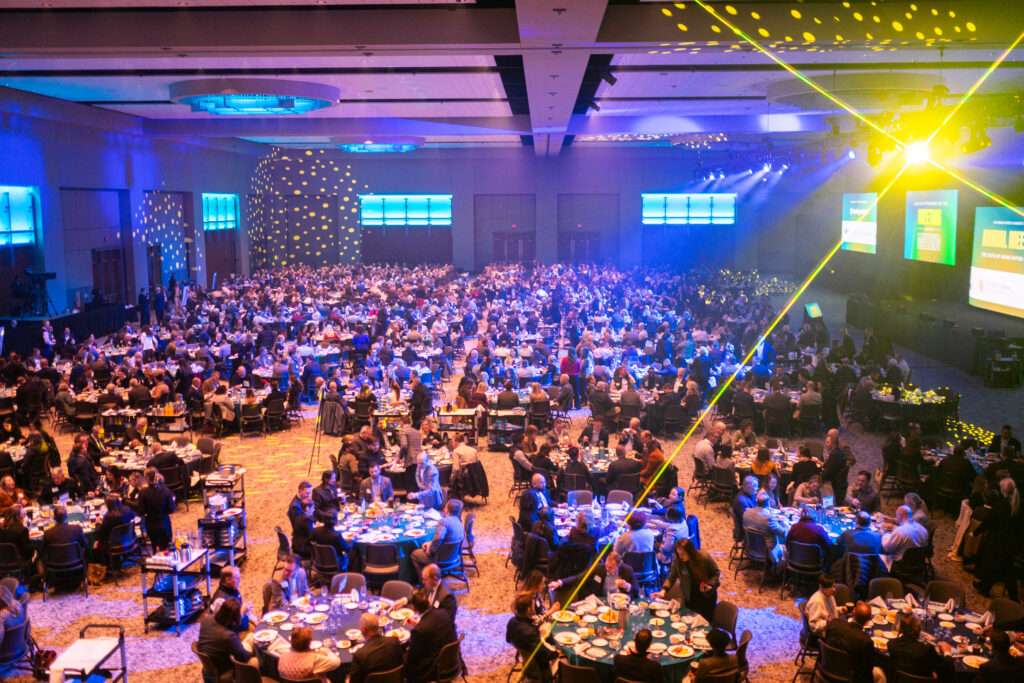
Across every industry and at every event, we’re helping businesses connect, collaborate, and innovate. Through more than 160 days of events and programs, you can experience our business community’s energy, and when we gather, we make things happen.
- Collaborative Space: Members enjoy access to a high-tech downtown office space featuring secure WiFi and unlimited coffee.
- Leadership Training: Leadership Grand Rapids, Emerging Leaders, Lead Up: Leadership Development for New Managers, and Women in Leadership are preparing the next generation of business leaders.

Leading with Purpose
The Chamber’s Leading Partners, include industry leaders like Corewell Health, Meijer, and Steelcase. Together we’re investing in the region’s economic future. Their support fuels initiatives such as the Downtown Pathways Project, which provides permanent housing for people experiencing chronic homelessness.
Member Spotlight: Renaming and Rebranding a 15-Year-Old Company
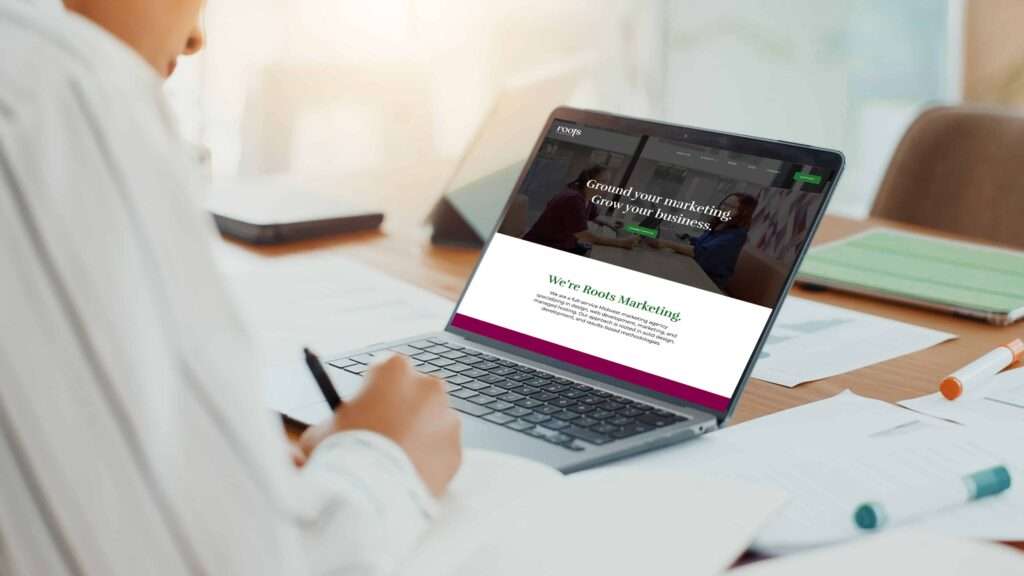
After 15 years, a name change feels risky. But for Tom Damitio and the team at Roots Marketing, it was the only way to keep growing.
Tom saw firsthand how an outdated brand can create friction. He stopped treating his own brand as an “internal project” and started treating it like a client.
What I Learned From Renaming and Rebranding a 15-Year-Old Company
After 15 years as Corporate Conversions, we made the decision to rebrand and officially become Roots Marketing.
That sentence still feels a little surreal to write.
When you’ve operated under the same name for a decade and a half, it starts to feel permanent, and like changing it will be disruptive, risky, or even irresponsible. But looking back now, there are three things I know for sure:
- The rebranding process was easier than I expected
- Clients and non-clients embraced the change
- We proved to ourselves that we truly practice what we preach
Why We Changed Our Name
Our old name wasn’t bad. In fact, it served us well for a long time. We grew steadily most years, built strong client relationships, and established ourselves in the market. But over time, a few things became impossible to ignore. The name was too long, too vague, and required far too much explanation.
When your own team isn’t excited about saying the company name…
When people misread it on name tags and business cards…
When the first question you always get is, “So… what do you actually do?”
Those are signals. Big ones.
But the biggest reason we rebranded was: The name no longer felt like us.
Knowing Something Is Holding You Back
One of the most important lessons I learned through this rebranding process is simple, but not always easy to act on: If something is holding you back, address it.
It’s tempting to tolerate friction, especially when it’s familiar. Changing a company name feels uncomfortable. It raises questions. It introduces risk. And it’s easy to convince yourself that internal initiatives can wait while client work takes priority.
We could have kept going as Corporate Conversions. But we knew deep down that the name and messaging were no longer aligned with who we were or where we were going.
The Idea Started Long before the Launch
We didn’t wake up one day and decide to rebrand on a whim.
We first committed to finding a new name in December of 2023. It took about five months to land on Roots Marketing. That alone should tell you how intentional this process was.
“Roots” resonated because it reflects:
- Growth
- Our own roots in marketing
- The strong foundations we build for our clients
It finally gave us language that felt natural instead of forced.
The Part No One Talks about: Planning
Once the name was chosen, reality set in. Changing the name wasn’t “simple.” It was strategic.
We built a seven-month timeline and broke the rebrand into very real, very practical buckets:
- Social media
- Website
- Legal
- Content
- Media & PR
- Third-party tools
- Promotional items
- Sales collateral
This is where many businesses stall. Internal projects are easy to deprioritize. Client deadlines feel more urgent. And without structure, rebrands drag on…or never happen at all.
So we made a conscious decision to treat ourselves like a client.
We stuck to timelines.
We anticipated problem areas.
We rolled things out in the right order.
Because of that planning, we experienced zero issues with account changes, client communication, or prospect confusion.
What Surprised Me Most
Honestly the biggest surprise was how supportive everyone was.
Clients didn’t question it, and prospects weren’t confused. The response was overwhelmingly positive. That was a reminder that most of the fear around rebranding lives internally. When the strategy is clear and the execution is thoughtful, people adapt quickly.
Rebranding Isn’t for the Faint of Heart—but It’s Possible
I won’t pretend the process was effortless. It took time, focus, and commitment. But it also wasn’t nearly as daunting as it’s often perceived to be. More than anything, it breathed fresh life into our business and into our team.
And maybe that’s the most important takeaway: Rebranding isn’t about a new logo or a new name. It’s about alignment. It’s about making sure your brand reflects who you are now, not who you were years ago.
If You’re Feeling Stuck…
If you’ve been questioning your name, your messaging, or your brand identity, that discomfort might be telling you something. We’ve been there. We’ve done it. And we now help other businesses navigate that same process with clarity and confidence.
If you’re considering a rename or rebrand and want to see how we approached it internally, reach out. We’re happy to share the tools that guided us over the past year!
Sometimes, the change you’re avoiding is the one that helps you grow.
Grand Rapids Policy Conference 2026: Your Questions Answered
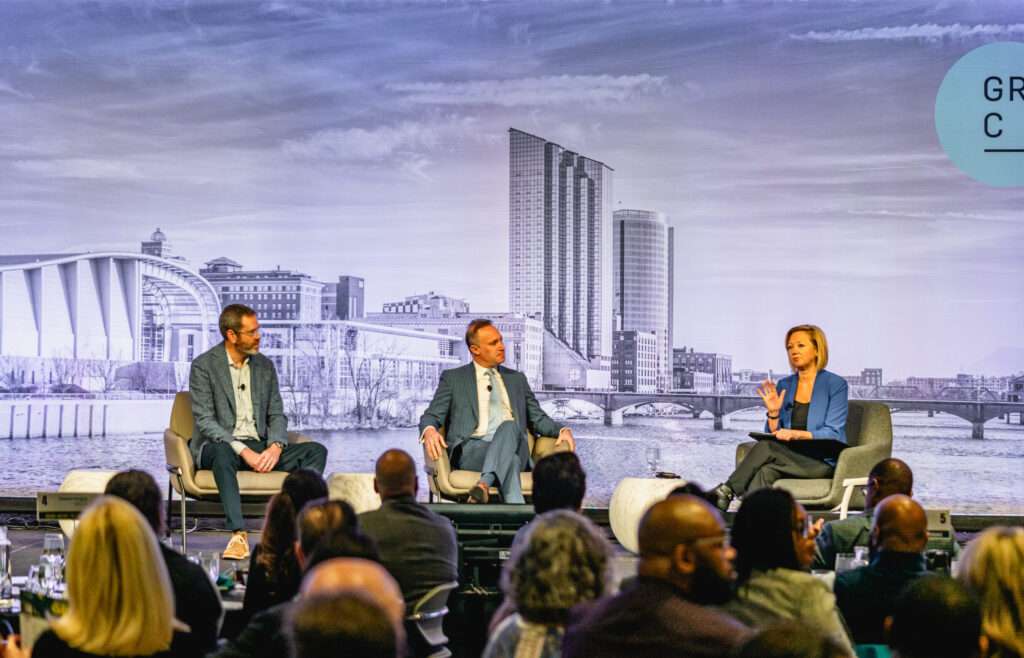
City Builder Panel
How can Grand Rapids better connect people to jobs, housing, and destinations through transit and regional transportation options?
Grand Rapids has made real progress, but we’re still a region where you pretty much need a car to get around. Our transit system works reasonably well within the city, but we need to think bigger and connect the whole region more seamlessly. Better bus frequency, more reliable routes, and smarter connections between communities would make a huge difference for working families and for local leaders who want to create walkable, accessible communities.
We should also be open to creative solutions to create better connections between neighborhoods and job centers. At the end of the day, regional collaboration on transportation isn’t a nice-to-have anymore. It’s essential to make West Michigan a more equitable and competitive place to live and work.
What policies or local regulatory barriers are slowing development and making it harder to build transformative projects?
A major challenge is unpredictability. When you can’t get a clear answer on permitting timelines or know whether a project will get approved, it creates real hesitation around investment. Some of our zoning rules and parking requirements feel stuck in an older vision of what cities should look like, and they make it harder and more expensive to build the kinds of projects Grand Rapids needs.
Historic preservation matters, but it needs to be applied thoughtfully, so it doesn’t block good projects in buildings with limited historic value. The city genuinely wants to be a good partner, and that’s encouraging — but we need a regulatory culture that leans toward finding solutions rather than creating barriers.
What lessons can Grand Rapids learn from cities like Detroit about placemaking, public space activation, and downtown investment?
Detroit teaches us that great cities aren’t just built – they’re intentionally curated and maintained. It’s not enough to have a beautiful public space if nothing is happening in it. Detroit has done a tremendous job creating reasons for people to show up downtown year-round, like seasonal events, local vendors, art installations, and community gatherings that make people feel like the city belongs to them.
Grand Rapids has immense opportunities, especially as exciting public spaces are about to come online. We need to be bold about activating our public spaces with community-driven programming and giving our community the chance to shine.
And none of that works if people don’t feel safe and the spaces aren’t well cared for. Cleanliness, lighting, and a sense of security aren’t extras. They’re the foundation. Businesses scout locations. Young professionals visit on weekends before deciding to move. Visitors share their experiences online. The condition of our public spaces shapes all of those impressions. Grand Rapids needs to make sure placemaking investment reaches neighborhoods across the city, not just the blocks most visible to outsiders.
Who are Grand Rapids’ biggest competitors for talent, and what role do higher education institutions play in attracting and retaining that talent?
We’re competing with cities like Columbus, Indianapolis, and Madison for the same pool of talented young people, and all of them are working hard to make their case. Grand Rapids has a great story to tell, and we need our universities to be a bigger part of communicating that. We have a robust higher education community in West Michigan that bring thousands of students into our community every year. The question is whether those students leave feeling connected to Grand Rapids or just passing through. Internships, community involvement, and genuine engagement with the city’s future can make the difference between a graduate who stays and one who heads to Chicago.
Looking ahead, what should we expect for the next 10 years of growth and development in Grand Rapids?
It’s a really exciting time to be in Grand Rapids, because we’re on the verge of realizing a lot of carefully laid plans. But we cannot rest on our laurels – we have to keep looking forward.
We’re going to see more demand for living in the urban core, more creative housing solutions, and continued growth in sectors like healthcare and life sciences that are already putting us on the national map. Sustainability and resilience are going to become real priorities as the city responds to changing expectations from residents and businesses alike.
The biggest factor in how good the next decade looks will be whether our region can work together. If Grand Rapids, its neighboring communities, and Kent County can align on the big questions around housing, transportation, and economic development, the upside is enormous.
Data Center Panel
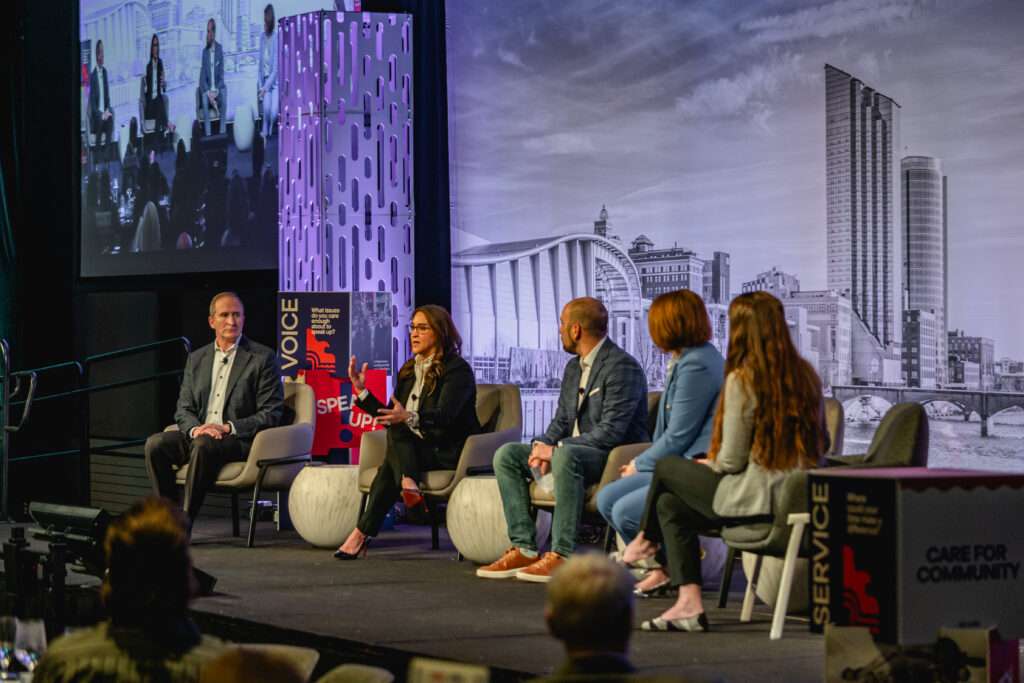
What are the actual impacts of data centers on local infrastructure, including water use, land use, and noise?
From the specific requirements placed on the development from local governments to the natural features of a particular site, each data center facility is unique to the location it is sited in.
- Water: Modern data centers use closed-loop cooling systems that recirculate water in amounts comparable to one large office building or apartment complex (50,000–75,000 gallons/day). Under existing Michigan law, facilities must connect to regulated municipal water systems, not private wells, and are subject to local and state environmental review.
- Noise: Noise levels are comparable to a typical office or commercial building. Equipment runs inside enclosed buildings, and backup generators only operate during emergencies or required testing. All operations are subject to local, state, and federal noise regulations.
- Land use & other impacts: Site plans must comply with local zoning and environmental standards – including setbacks, landscaping, and screening to reduce visual and noise impacts on neighbors. Construction brings a temporary traffic increase. However, once the data center is operational traffic is typically lower than most commercial or industrial facilities.
Learn more about specific real world case studies around the country here. [link: https://www.wmdatacenters.org/examples-from-other-communities]
How do data centers fit into Michigan’s clean energy goals and renewable energy strategy?
Under Michigan law passed in 2024, data centers must demonstrate that at least 90% of their electricity will come from clean or renewable sources in order to receive a sale and use tax exemption. This requirement can be achieved through on-site generation, utility contracts, or participation in approved green energy programs. This law also requires that facilities are certified under one or more green building standards, working toward lowering energy consumption overall. [reference link: https://www.michiganbusiness.org/services/data-center/]
All regulated utilities in Michigan are required to comply with Michigan’s 2023 clean energy laws, regardless of what customer they are serving. [reference link: https://www.michigan.gov/mpsc/commission/workgroups/2023-energy-legislation]
What opportunities exist for local businesses to work with data centers once they are operational?
In West Michigan, we have many qualified local contractors, service providers and suppliers that are already working with data centers in Michigan and across the country to support critical digital infrastructure.
During the construction phase of the project, data centers require significant investment in labor, materials, and equipment – with much of this spending focused on local businesses. The Anderson Economic Group estimates that construction-phase will generate hundreds of millions in economic output, with the possibility of significantly more based on the size of the data center facility.
Beyond the construction phase, data centers require continued operations and maintenance support. That same report indicates that a small data center facility with a 40-year life cycle will contribute over $1 billion in economic output over the lifespan of the facility, with much of this expenditure happening with local businesses.
Reference link: Here
How can communities ensure data centers deliver meaningful community benefits, or help fund or support broader community transformation and infrastructure improvements?
Data centers provide meaningful financial benefits to local communities through property tax revenue. Each facility could add $30 million per year in local property tax revenue, giving local communities a unique opportunity to think innovatively about how to make meaningful improvements for their residents. This could look like several things: investments in public schools, roads, police and fire, libraries, parks, water and sewer infrastructure – or even lowering property rates.
Over time, these large investments can reduce the tax burden on residents and existing businesses, while strengthening municipal budgets, supporting infrastructure improvements, and providing greater long-term financial stability for the community as a whole.
Specific to projects in West Michigan, Microsoft has committed to investing in local communities. One part of this is not asking for property tax abatements from local communities so that these benefits are realized for local residents. Beyond property tax revenue, Microsoft has also committed to investing in local AI training and nonprofits. Learn more about Microsoft’s Community First AI Infrastructure here:
Reference link: Here
Bipartisan Panel
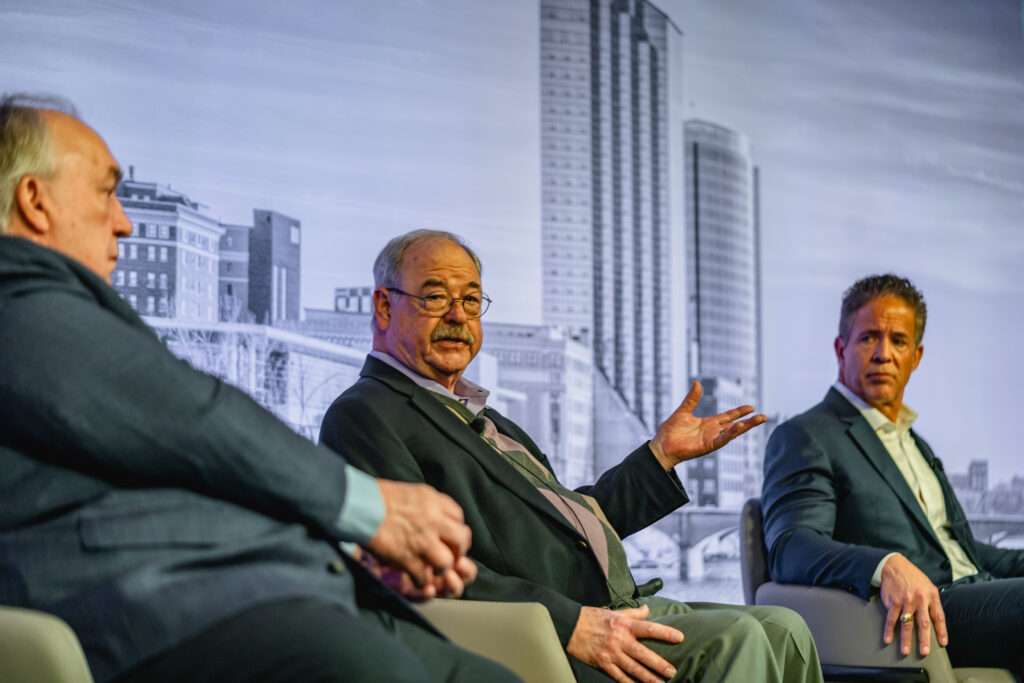
Is bipartisan cooperation still possible in today’s highly polarized political environment?
Yes, but it is a choice. A bipartisan effort took place last year to pass a new road funding plan. The state solution to the tipped minimum wage issue was a big bipartisan effort. Other legislative introductions have been bipartisan. It is a choice to work together behind the scenes, despite all the noise on cable news and social media.
How can elected officials rebuild trust in democratic institutions and the election process?
Let’s start with our county and local clerks. Our polling has shown repeatedly that people know and trust their local clerks. They are who run Michigan’s elections. Our election system is decentralized and therefore resistant to election fraud. But voters need to be educated about our process and safeguards. That is the mission of our work on the Democracy Defense Fund.
How can leaders encourage more civil political discourse and reduce the tone of political rhetoric?
Keep it local. Work with your local elected officials. Civic leaders. School boards. At church. Chamber staff and leaders. Meet with people over coffee. It starts with you!
How can citizens and leaders work together to reduce polarization and strengthen civic engagement?
Start by talking to your neighbors. Attend office holder coffee hours. Get to know civic leaders in your community. But do it in person. Because cable news and social media is currently serving as the easiest path for keyboard warriors to take control of our attitudes about others. When we set the phones down and talk with our community, we are reminded we have a lot more in common than we think. We all want better schools, lower taxes, higher incomes, better roads and opportunity for our children.
Beyond the Wall of Text: 6 Steps to Write Blogs People Actually Read
We’ve all been there. You click on an interesting headline, only to be met with a “wall of text,” a never-ending block of text with no breaks, no images, and no clear direction. What do you do? Most of us hit the “back” button before even reading the first sentence.
In 2026, your audience is busier than ever. Whether you are a small business owner in Eastown or a West Michigan CEO, your blog shouldn’t be a brain dump; it should be a roadmap.
Let’s break down how you can create a blog that captures attention and maintains it.
Start with a Compelling (and Searchable) Title
Your title is your first and sometimes only impression. A great title does two things: it promises a benefit to the reader and uses words the reader is searching for. Topics are popular when they are timely and specific.
The Problem:
Using vague titles like “Company Update” or “Our Thoughts on XYZ.”
The Fix:
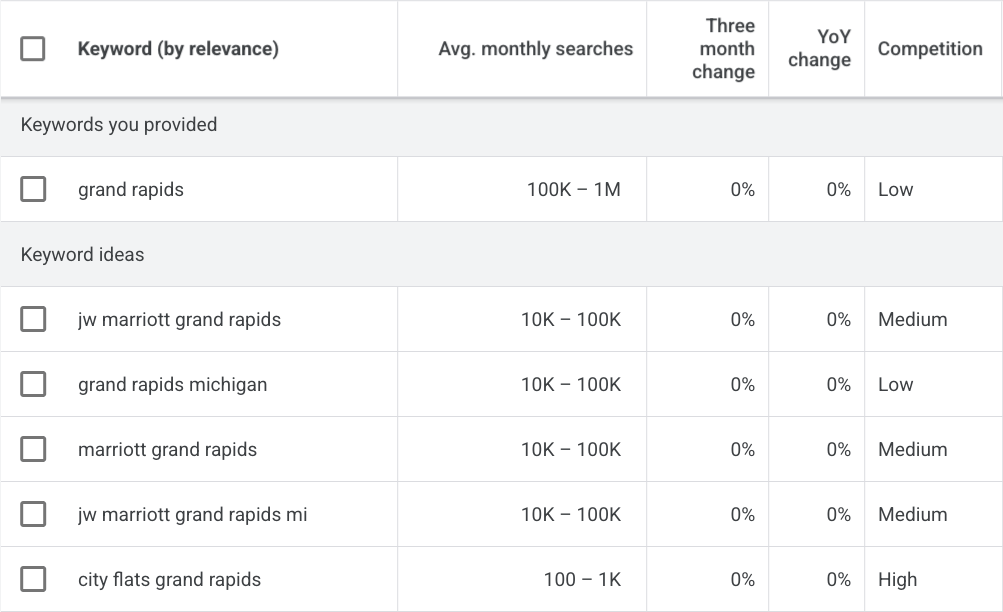
Use Google Keyword Planner (a free tool in Google Ads) to see what people are typing into search engines. Instead of “Grand Rapids Business,” try using your business name with details to be more specific.
Guide the Reader with Headers
Think of headers (like the ones in this post) as the “street signs” of your article. They allow readers to scan your content and find exactly what they need or want to read.
From an SEO perspective, headers tell search engines what your content is about. If you use keywords in your headers, you’re much more likely to show up when someone searches for those topics locally.
Respect the "Scan" (Keep it Concise)
In 2026, the ideal blog length for engagement is typically between 800 and 1,200 words. However, the structure of those words matters more than the count.
- Use bullet points: Like this one!
- Keep paragraphs short: 2-3 sentences are a “sweet spot” for mobile reading.
- Avoid the “Wall of Text”: If a paragraph looks like a brick, people will treat it like a barrier.
Give Them Something to Look At
A blog without visuals is like a storefront without a window display. Images, infographics, or short videos break up the text and provide “visual rest” for the reader.
Articles with images get 94% more total views than those without.(Source: MGD Solutions)
Local Tips:
- Use original photos of your team or your office rather than generic stock photos to show authenticity and build trust.
- Make sure your images are properly labeled; the file name can determine whether they show up in Google. Google doesn’t know that your photo named “IMG_324” is actually a photo of your business.
Avoid the "Anti-SEO" Trap
Many people think that “SEO” means repeating their business name 50 times. This is called “keyword stuffing,” and in 2026, search engines can penalize you for it.
Bad habits that can hurt traffic:
Avoid the “Wall of Text”, writing one long, unbroken narrative. Formatting is your friend here.
The Problem:
Modern readers are “skimmers.” If they see a massive wall of text, their brains register it as “too much work,” and they leave.
The Fix:
Use the “Rule of Three.” Try to keep your paragraphs to three sentences or fewer. Break up your story with headers, bullet points, and even bolded or italicized text to highlight the most important takeaways.
The “Dead-End” Mistake: Forgetting to link to other helpful pages on your website.
The Problem:
If a reader finishes your post and has nowhere else to go, they will leave your site entirely. Think about related products while shopping online.
The Fix:
Treat your website like a web. If you mention a service you provide or a topic you’ve written about before, link to it! This keeps readers on your site longer, which Google loves.
Using “Click Here” instead of descriptive links like “Download our Marketing Guide.” Helps your SEO.
The Problem:
If you just use “Click Here,” you are wasting an opportunity to tell Google exactly what your website offers.
The Fix:
If you link to your events page using the words “Grand Rapids Business Events,” Google now knows that the destination page is a high-quality source for those specific words.
Finish with a Clear Next Step
Never leave your reader hanging. Once they finish, tell them what to do next. This is called a Call to Action (CTA). This could be a link to a product, service, sign up, social follow, or more information.
Create Great Content with Us
Effective blogging takes practice, but it is the most powerful way to share your expertise with the West Michigan business community.
Stay informed. Subscribe to our Chamber Newsletter to receive professional insights directly in your inbox.
Have a story or expert insight to share? Feature your business as a thought leader on the Chamber Blog and connect with thousands of West Michigan decision-makers, or Explore our Programs and Events to find your next opportunity to “Create Great” in Grand Rapids.
Commentary: If we want vibrant communities, we have to build them
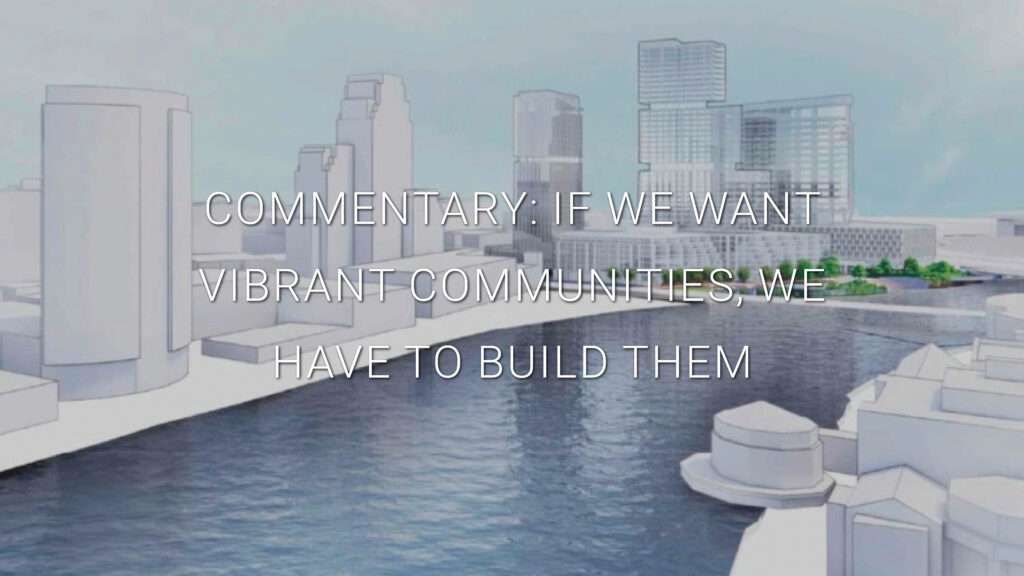
The economic forecast for this year is steady but cautious. Consumers are tightening their belts. Business confidence is mixed. Technological shifts are reshaping how and where we work. In moments like this, the path forward is not retreating — it is thoughtful, strategic investment.
Our opportunities and challenges are clear: we can build the kind of cities and urban environments that retain talent, attract investment, and fuel growth, or we can fall behind.

Across Michigan, major developments representing billions of dollars in investment are working to convert underutilized and blighted properties into vibrant community assets. Yet inflation, environmental remediation costs, labor shortages, and supply chain pressures are compounding, making already complex projects even more difficult and costly to deliver.
Nearly a decade ago, Michigan established the transformational brownfield program to address these challenges precisely. It was designed to unlock large-scale projects that catalyze economic growth and revitalize communities in ways that traditional financing simply cannot support.
Because of this program, West Michigan has generational opportunities taking shape.
The soon-to-open Acrisure Amphitheater and the Amway Soccer Stadium, opening in 2027, are publicly owned assets that will create new public spaces, generate economic activity, and strengthen our region’s cultural fabric. Places where people come together to build memories and deepen emotional connections with others.
The proposed Fulton & Market development will convert surface parking into a vibrant hub to live, work, and gather while expanding public access to the Grand River and enhancing our downtown experience.
These projects are not giveaways. They are performance-based investments. Through a rigorous and transparent process, state and local leaders work with the business community to authorize tax capture only from new revenue generated by the project itself. No upfront checks. No incentives without delivery.
The return is tangible.
These investments are projected to generate significant new city income tax revenue, increase foot traffic for small businesses, create construction opportunities for local contractors, and attract visitors who support hotels, restaurants, and locally owned businesses. They expand the tax base and strengthen our region’s long-term competitiveness.
And this tool is not limited to Grand Rapids. Communities across Michigan have used it to spark transformative investment and restore momentum in areas that have long struggled to attract capital.
For that progress to continue, the Legislature needs to act to extend the transformational brownfield program and raise its cap. Without action, future opportunities may never advance beyond the conceptual stage.
Michigan’s long-term economic success depends on creating a broadly competitive business climate and building places where people want to live, work, and invest. Increasingly, talent and capital flow to communities with vibrant downtowns, accessible public spaces, and strong cultural amenities.
Our future depends on strong cities, downtowns that feel alive, neighborhoods rich with opportunity, and public spaces that invite connection and growth.
The transformational brownfield program turns unrealized potential into real progress. It helps turn a vision into reality. Now is the moment to ensure that momentum continues.
If we want vibrant communities that grow, compete, and endure, we must choose to invest in them.
Rosalynn Bliss is the former mayor of the City of Grand Rapids; Rick Baker is president & CEO of the Grand Rapids Chamber.
Whitmer’s Final State of the State: What You Need to Know

On Wednesday, Governor Gretchen Whitmer delivered her final State of the State. Her policy agenda for her last year in office is focused: literacy, housing, and healthcare affordability.
Literacy – Every Child Reads
Across Michigan, too many students aren’t reading at grade level. Her plan includes:
- Universal full-day pre-K
- Statewide adoption of evidence-based reading curriculum (Science of Reading)
- Dyslexia screening
- Expanded tutoring
Why it matters: Talent is critical for West Michigan employers, and that starts with students’ ability to read. The Grand Rapids Chamber supports evidence-based approaches to improving literacy and ensuring students are reading by third grade.
Housing
To increase housing supply and decrease the cost to build, the Governor proposed:
- Creating a state affordable housing tax credit that mirrors the existing federal credit
- Reforming zoning, lot sizes, and other construction regulations
Why it matters: Affordable housing has been a key priority for the Grand Rapids Chamber for nearly a decade. Our government affairs team is proud to partner with the House, Senate, and Governor on moving zoning and regulation reforms forward.
Healthcare Affordability
Through federal changes and rising costs, healthcare continues to be a key concern for many Michiganders. The Governor proposed:
- Capping medical debt interest rates
- Keeping medical debt off credit reports
- Banning liens on homes for medical debt
- Stabilizing Medicaid funding
Why it matters: While there is broad agreement on reducing healthcare costs, the Grand Rapids Chamber continues to prioritize market-driven solutions that increase transparency, expand provider options, and preserve flexibility in plan design.
These proposals were met with generally bipartisan support; however, the policy-making window is tight this year with the election in November. We expect to see a lot of discussion on these ideas and more over the next several months.
Chamber Issues Forum Tackles Rising Health Care Costs and Employer Strategies
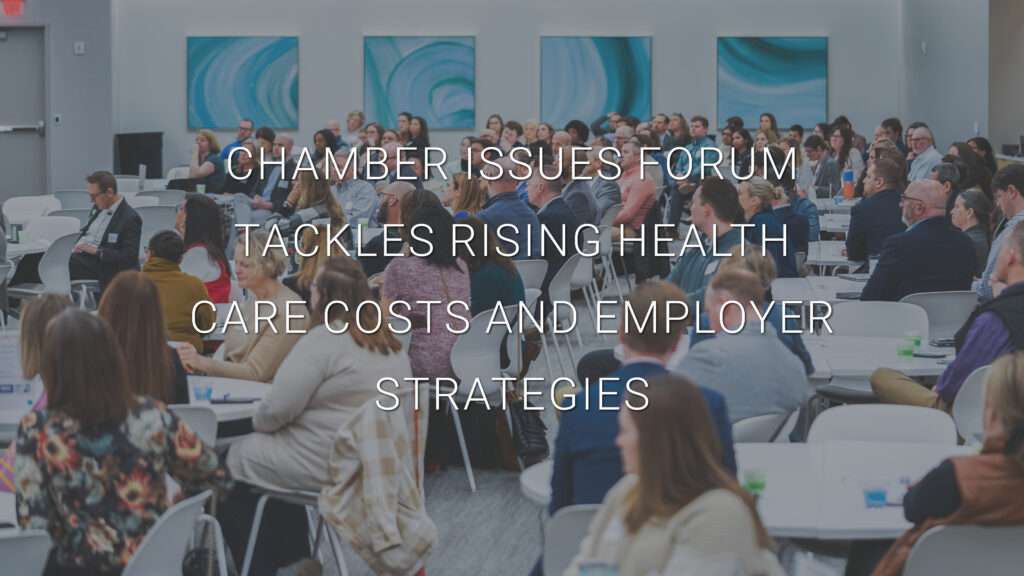
On February 20, the Grand Rapids Chamber convened employers, insurers, and health care providers for a candid conversation about one of the most pressing challenges facing West Michigan businesses: rising health care costs and the future of employee benefits.
The discussion brought together leaders from Corewell Health West, Priority Health, Blue Cross Blue Shield of Michigan, Bank of America, Haworth, Granger Waste Services and the Chamber to explore what’s driving costs and what’s working to manange them and deliver value.
A System Under Pressure — and Adapting
Opening the forum, Josh Kooistra, President of Corewell Health West, shared a system-level perspective.
- Corewell is working to control costs and recently consolidated more than 20 leases into a centralized health campus — an operational move designed to increase efficiency and coordination. At the same time, the system continues to invest in advanced care, including cutting-edge therapies.
Costs:
- 54% of expenses are wages and benefits
- 41% of spending is tied to pharmaceuticals and medical supplies
- High-cost therapies are transforming care while increasing financial strain
As Michigan’s largest employer, Corewell spends approximately $1.6 billion annually with Michigan businesses.
Historically, costs have often been passed through to insurers and employers. Increasingly, leaders acknowledged that this approach is unsustainable and that transformational change — not incremental adjustments — is required.
Access also remains central. Leaders highlighted disparities in life expectancy in ZIP code 49507 and the importance of initiatives like Amplify in expanding equitable care.
What Employees Are Feeling
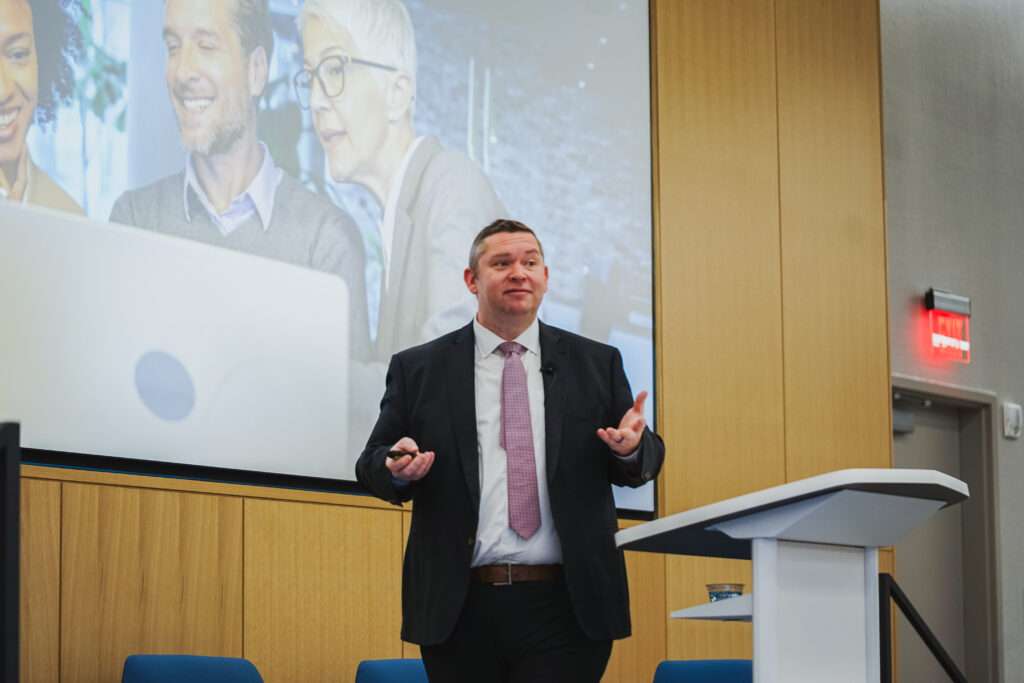
Paul Keifer, President of Bank of America West Michigan, shared insights from the 2025 Workplace Benefits Report, highlighting the human side of the issue.
Some key takeaways included:
- Only 57% of employees are using all the PTO they earn
- Caregiving responsibilities and personal debt are adding pressure
- Many employees do not fully understand Medicare
- Awareness of existing benefits remains low
The message for employers: benefits matter, but understanding and communication matter just as much.
Employees increasingly stay with employers for work-life balance and stability, not just compensation. Making the full value of benefit packages visible is critical.
Reevaluate annually
Contain Costs Creatively
Haworth is piloting AI-supported musculoskeletal care options to reduce traditional PT costs.
Increase Transparency
Granger Waste Services rolled out a base-and-buy-up model — offering a strong high-deductible plan while preserving employee choice.
As a smaller employer, the Grand Rapids Chamber is continuously balancing contributions, plan design, and affordability.
What’s coming next from providers:
- Greater focus on biosimilars to reduce drug costs
- Closer scrutiny of pharmacy benefit managers
- Expanded value-based care models
- Potential Medicaid reductions impacting providers
The shift: from “sick care” to prevention, powered by data and aligned incentives.
Bottom line:
Health care costs can’t be solved by one sector alone. Employers, providers, and insurers must collaborate to manage cost, expand access, and ensure employees fully understand the value of their benefits.
Employers are innovating. Providers are restructuring. Insurers are redesigning models. But lasting progress will require collaboration, transparency, and shared accountability.
Reevaluating Employee Benefits to Balance Demand and Rising Costs
In a time when healthcare costs are rising significantly, employers are evaluating their benefit offerings while balancing the cost of healthcare benefits with employee attraction and retention. It can be a difficult struggle to balance what is best for the organization with what is best for your people.
Depending on the size of the organization, there are various ways to offset these rising costs.
Switching From Fully Funded to Self-Funded
Larger employers are switching from a fully funded to a self-funded plan, which can be a great way to manage costs and customize plans.
For some small- to mid-size employers where self-funding is not a viable option, there is good news: there are ways to enhance benefits without incurring high costs.
Adding a Spousal Surcharge
Some employers have adopted a spousal surcharge, so if your spouse is employed and offered coverage, there would be a surcharge per paycheck to add them to your plan.
High-Deductible Health Plans Paired with HSA
Offering high-deductible health plans paired with an HSA is very popular among employees and is generally less expensive than a low-deductible traditional plan.
While the employees may see this as a loss of a valuable benefit, pairing these options with other benefits that are low-cost to the employer but important to employees can really close that gap. It is important to understand your demographic and which employee benefits are most important to them.

Financial Wellness is Top Of Mind
A recent workplace benefits report from Bank of America found that financial wellness is top of mind for employees. Utilize your resources! Offering consultations with your 401(k) provider (free to both the employer and the employee) or choosing an EAP that offers financial wellness (free to the employee and very low cost for the employer) can be a nice benefit the employee really wants. Most benefits brokers also offer complementary resources, such as Medicare counseling for those entering retirement age.
Take Other Workplace Benefits into Consideration
When I interview potential candidates, PTO, work/life balance, and mental health often come up as priorities. In most cases, PTO doesn’t cost the employer anything and can be a great way to subsidize the rising cost of other benefits. It is important not only to offer PTO but also to encourage employees to use it and to respect their time when they are away from the office, by setting boundaries such as no communication after 5pm or no messaging while on PTO. Offering an EAP is also a low-cost way to support your employees’ mental health needs, and most EAPs offer much more, like elder care consultations, financial wellness, etc.
Offering ancillary benefits, such as pet insurance, identity theft protection, and voluntary life insurance, can also be very attractive to employees. Even if they bear all the costs themselves for these benefits, they are often cost-prohibitive to purchase.
Lastly, you must communicate the benefits regularly. 70% of what a new employee learns on the first day is forgotten within 24 hours, so consistently remind your employees of all the great offerings available to them, even if you do not think it is important. What might not be top of mind for you could be the most important employee benefit to someone else.
Keep learning
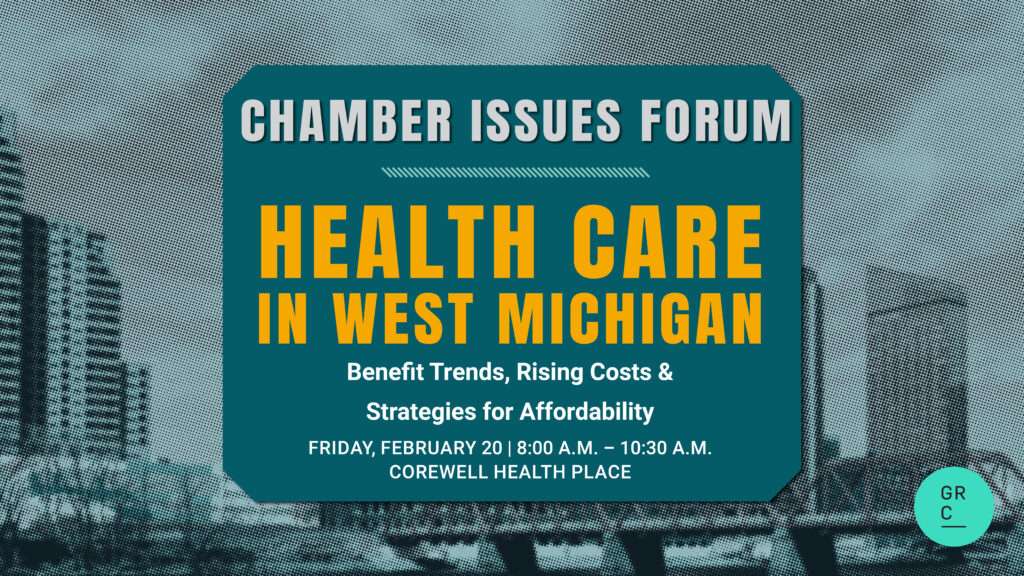
Join us for our Chamber Issues Forum this Friday, February 20 to hear from leaders on trends, strategies, and collaborative approaches to delivering great benefits amid the rising cost of health care. This session is eligible for 1.5 SHRM PDC’s.
Review Your Chamber Benefits
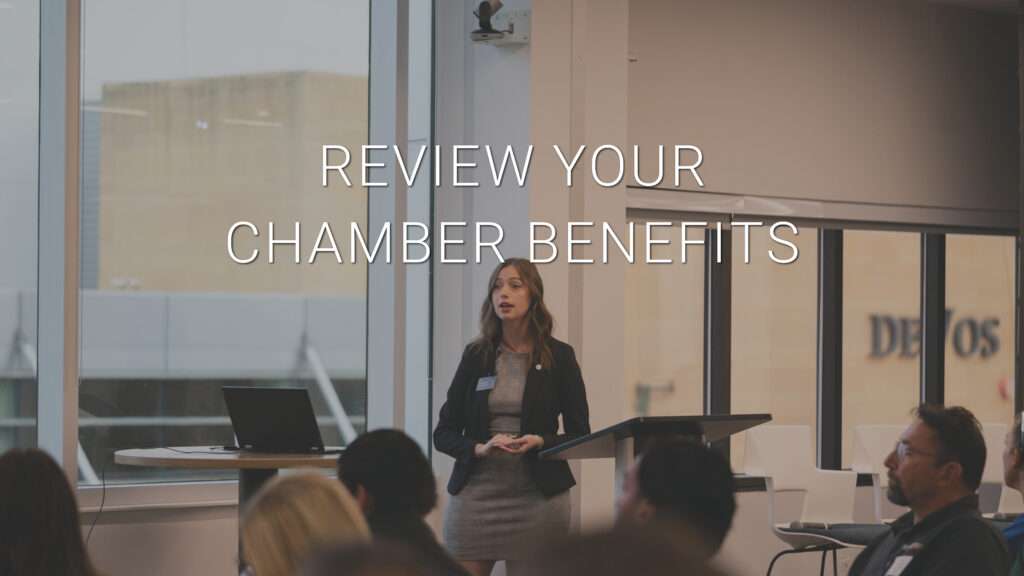
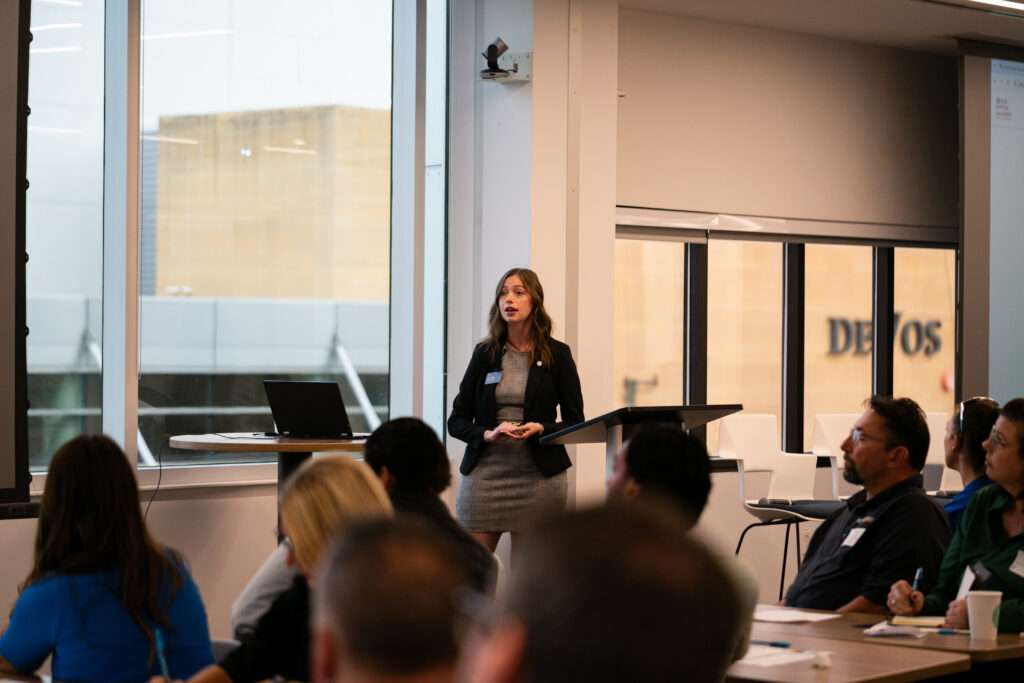
Last week more than 80 attendees came together for our first Chamber 101 event of 2026! It was a great afternoon spent connecting with both members and those interested in membership as we dove deeper into how to fully leverage your Grand Rapids Chamber membership.
During this interactive presentation, we covered:
Who We Are & What Makes Us Unique
We shared an overview of the Grand Rapids Chamber and our work as the hub of business growth and prosperity in West Michigan for ALL.
As a relentless advocate for businesses on issues that shape our business climate, we are dedicated to creating spaces for connections, insights, and resources that make running your business easier.
Member Benefits & Resources
Attendees explored key tools available to them, including:
- Optimizing visibility through our Member Directory and other SEO boosting opportunities
- Events calendar and networking opportunities
- Member benefits, cost savings benefits, and partnerships
- Job board, coupons, and sponsorship/advertising opportunities
- Utilizing the Chamber’s collaborative office space for your teams needs
Tip: Keep your directory listings up-to-date, and utilize the Grand Rapids Chamber website as a visibility tool.
Access & Involvement
Chamber membership includes all employees of your company. Increase your team’s engagement by:
- Ensuring your staff is aware of and encouraged to use your membership
- Attending signature events and networking programs
- Joining councils and committees
- Develop & retain teams by tapping into leadership programs (with Spring 2026 registration now open)
- Connecting directly with their Membership Engagement Manager for a personalized approach to your engagement
Staff Panel & Member Insights
Our panel of Chamber staff and Ambassador Council members provided practical insight on how to:
- Build meaningful, relationship-driven connections
- Leverage sponsorships and visibility opportunities
- Engage in advocacy and policy initiatives
- Connect with community and understand systems through Chamber programming
- Take small, intentional steps to build momentum quickly
The Grand Rapid Chamber is working for our members, and that value only grows with engagement. The more intentional you are about showing up, connecting, and utilizing available resources, the more impact you’ll see for your business and team.
Take the Next Step
Connect with your Membership Engagement Manager who is your dedicated point person to craft your strategic engagement to optimize your membership for 2026!
For any additional questions or if you are ready to explore membership, contact Amanda Hentsch, Senior Director of Membership, at amanda@grandrapids.org or (616)771-0340
West Michigan’s Most In-Demand Jobs — What Employers Should Know
A new report from West Michigan Works! points to continued strong demand for talent across West Michigan — reinforcing what many Chamber members are already experiencing.
Seven key industry clusters lead demand:
- Agribusiness
- Construction & energy
- Health sciences
- Hospitality
- Information technology
- Manufacturing
- Professional & administrative services
Notably: Less than half of the listed roles require a four-year degree. Many can be accessed through certifications, technical training, or apprenticeships.
Where demand is strongest
Examples of high-need roles include:
- Construction managers
- HR specialists
- Project management specialists
- Marketing & market research professionals
- Healthcare administrators and clinical roles
- Information systems managers
The trend: West Michigan needs both skilled trades and high-skill professional talent.
Why it matters
For employers:
- Competitive hiring will continue
- Workforce pipelines and retention strategies are critical
- Partnerships with education and workforce agencies matter more than ever.
For job seekers:
- There are strong career pathways without a traditional four-year degree
- Many of these roles offer competitive wages and long-term stability
At the Grand Rapids Chamber, we’ll continue working alongside employers, workforce partners, and education institutions to strengthen talent pipelines and support a vibrant regional economy.
To learn more about our talent pipeline work, please contact Jamell Hatchett at jamell@grandrapids.org.